Teaching
I've been teaching, facilitating, and designing learning experiences for over a decade - 300+ sessions across four continents, from corporate boardrooms to SXSW stages to Columbia Business School classrooms.
I write a newsletter called Groove Theory about how creative ideas, careers, and live moments find their rhythm. And I run Wavetable, an experiential education studio that builds interactive, narrative-driven learning.
One obsession runs through all of it: helping people become who they think they can be. Not through information transfer, but through experiences they actually want to be part of.

Keynotes
- Three Big Bets - AI strategy for agencies and professional services
- Groove Theory - The five elements of creative work (and why they matter more in an AI world)
- The Inverted Pyramid - Rethinking talent in the AI era
- Learning is Hollywood Now - The production revolution in experiential learning
1) Three Big Bets
AI strategy for agencies and professional services
The iPhone moment is here. Not for consumers - for how creative work gets done.
Most agencies are optimizing workflows. The ones that will thrive are rethinking their entire model - how they price, how they staff, what they're actually selling.
Three strategic bets. One conversation about what comes next.
Details
- For: Leadership teams, annual conferences, strategy offsites at agencies and professional services firms
- You're asking: How do we stay ahead of the AI shift without chasing every shiny thing?
- Why me: I've taught AI and machine learning to executives at JP Morgan Chase, IBM and Mastercard, and I run Wavetable - a small studio navigating this shift in real time. This isn't trend commentary.
Keynote at mci group, Paris - 2026
2) Groove Theory: The Five Elements of Creative Work
Finding your rhythm when AI handles the rest
Some work connects instantly. Other work - equally smart, equally polished - just doesn't. The difference isn't quality. It's groove.
I write a newsletter called Groove Theory, finding patterns across DJs who hold rooms for eight hours, game designers who teach without tutorials, actors who disappear into roles, restaurateurs who turn meals into memories.
Five elements keep showing up: Structure, Rhythm, Modality, Presence, Signal.
AI can generate content. It can't find the groove. These are the skills that matter more now, not less.
Details
- For: Leadership teams, creative departments, and anyone building work that needs to resonate with real humans in real rooms
- You're asking: What's distinctly human about creative work now that AI can generate infinite content?
- Why me: Groove Theory finds patterns across music, film, game design, and learning. This is the framework underneath all of it.
3) The Inverted Pyramid
Rethinking talent in the AI era
AI isn't just changing what's possible - it's changing who can do it.
A two-person studio ships what used to require a department. An indie developer builds a product that competes with funded startups. A junior with the right stack outperforms a team of seniors.
The old pyramid - where capability concentrated at the top - is flipping. And with it, everything we thought we knew about hiring, collaboration, and how scenes form.
Details
- For: L&D leaders, HR, Transformation teams rethinking talent strategy
- You're asking: How do we build teams when the old rules don't apply?
- Why me: I spent a decade as a talent agent and now run Wavetable, where we build skill development programs for companies. I've worked with talent, on talent, and now I'm running a studio that's more capable than ever because of the shift I'm describing.
4) Learning is Hollywood Now
The production revolution in experiential learning
A decade ago, production-quality video and live experiences meant studio time, crew, and serious budget. Now a two-person team can produce work that used to require a department.
The same shift is reaching learning - corporate training, executive education, the university classroom. The tools to create narrative-driven, production-quality experiences are becoming accessible to smaller teams. But the bigger question isn't about tools - it's about what learning even is when information is everywhere.
The answer looks less like curriculum and more like experience design. Less like instruction and more like enrollment - work done with people, not to them.
Details
- For: Learning leaders, higher education, talent development, anyone thinking about the future of experiential learning
- You're asking: What does learning look like when the tools change everything and information is free?
- Why me: I run Wavetable, an experiential education studio where we're living this shift - building narrative-driven, AI-powered learning experiences. I've taught at Columbia and IE Business School, and I've seen both sides of the production gap closing.
I also speak on storybuilding and customer experience - get in touch if those are closer to what you need.
Formats
- Keynotes - 20-60 minutes. I don't do the TED-style performance monologue. My keynotes have interaction built in - moments where the room does something, not just listens. Works better, sticks longer.
- Workshops - This is where I live. Half-day, full-day, multi-session programs. I've designed and run hundreds of these, and it's probably what I'm best at. Hands-on, structured, vibrant, with frameworks people actually use afterwards. Not death-by-Post-it.
- Teaching - Semester-long courses and guest lectures at business schools. More depth, more back-and-forth, more homework (for them and me).
- Panel moderation - Honestly, underrated. A good moderator does the prep, keeps the energy, makes the panelists look smarter than they expected, and gets the audience involved. I've hosted panels on AI, creator economy, learning innovation, and media futures - and I enjoy it more than I probably should.
- Facilitation - Offsites, strategy sessions, team days. When a group needs to figure something out together and needs someone to design and hold the structure.
Selected clients
- Corporate: Deloitte Global, EY, mci group, Pernod Ricard, NBC Comcast, IBM, Mastercard, Ubisoft, Publicis Groupe
- Education: Columbia Business School, IE Business School, Universidad Francisco Marroquin, The New School, University of Westminster
- Events & Creative: SXSW, CES, IBTM World, Soho House, Betaworks, The British Council, V&A Museum, CMX Summit, Creative Mornings
What people say
"Extraordinary - one of the best teachers I've had in any environment"
"Loved the keynote content, but even more, the warmth, the sense of humor, how authentic you are. More speakers should be that genuine and warm"
"Dynamic, hands-on, funny, great energy, and full of information"
"Howard's facilitation exemplified an impressive blend of creativity, analytics, and empathy"
"Not only an expert in teaching storytelling, but an engaging storyteller"
"THANK YOU HOWARD! I have the deepest respect for you and really am honored that I got to take your class. You are an amazing educator and an awesome cheerleader."
"Howard has really helped me gain the confidence I need to grow my business and be great."
"Howard is a great facilitator. He has a friendly and relatable teaching style as well as nicely designed decks that retain my focus and help me to absorb what I am meant to be learning."
If you want to work together
Drop me a note at howard@howardgray.net with what you're thinking.
What I think makes the difference
Rhythm matters more than information. Most sessions have too much content and not enough structure. I think about pacing, energy shifts, and when people need to do something - not just listen.
Participation isn't a gimmick. I don't add interaction because it's "engaging." I add it because people learn by doing, and a room full of passive listeners isn't learning much.
The room is smarter than any one person in it. My job is to unlock that, not to be the smartest one up front.
In Action
FAQs
Why you?
I've had an eclectic career - illegal rave promoter, advertising producer, talent agent, entrepreneur, teacher, soccer referee - and I'm hugely curious about creativity, entrepreneurship, and the future of work.
Every talk is customized for the audience, and there will probably be some alternative pop culture references in there too.
Can I watch some of your talks?
The majority of speaking and workshops are done for private clients, but I do have videos from a select number of sessions.
If you're interested in viewing more than what’s available on this page, just send me an email.
Do you ever speak for free?
Creating engaging and well-designed presentations takes a lot of time, energy, and effort so I don’t tend to speak for free, with two exceptions:
- charities and nonprofits with a mission close to my heart;
- opportunities to visit places I haven’t yet been to and really want to check out.
Are you in one of those locations, or run a charity or nonprofit? Drop me a note and let’s chat…
Speaker Bio & Photos
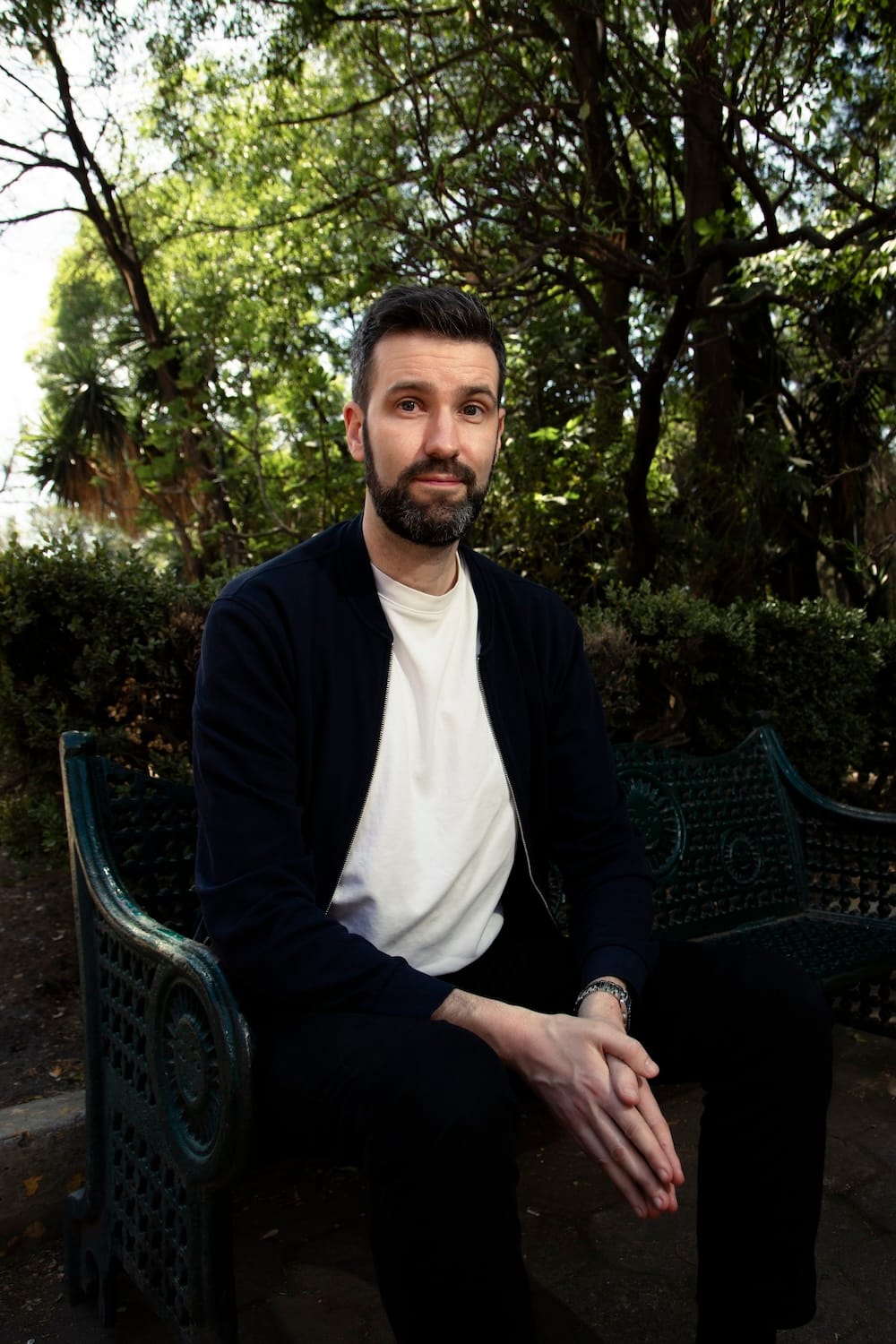
Howard Gray is a teacher, writer, and experience designer. He runs Wavetable, an experiential education studio, and writes Groove Theory, a newsletter about how creative work finds its rhythm.
Much of his current work explores how AI is reshaping learning and creative practice. He's delivered 300+ sessions across four continents, taught at Columbia and IE Business School, and sits on the SXSW advisory board.
Currently based between London and New York, Howard is still searching for the perfect breakfast.
Headshots