Five quid at the Old Spotted Dog
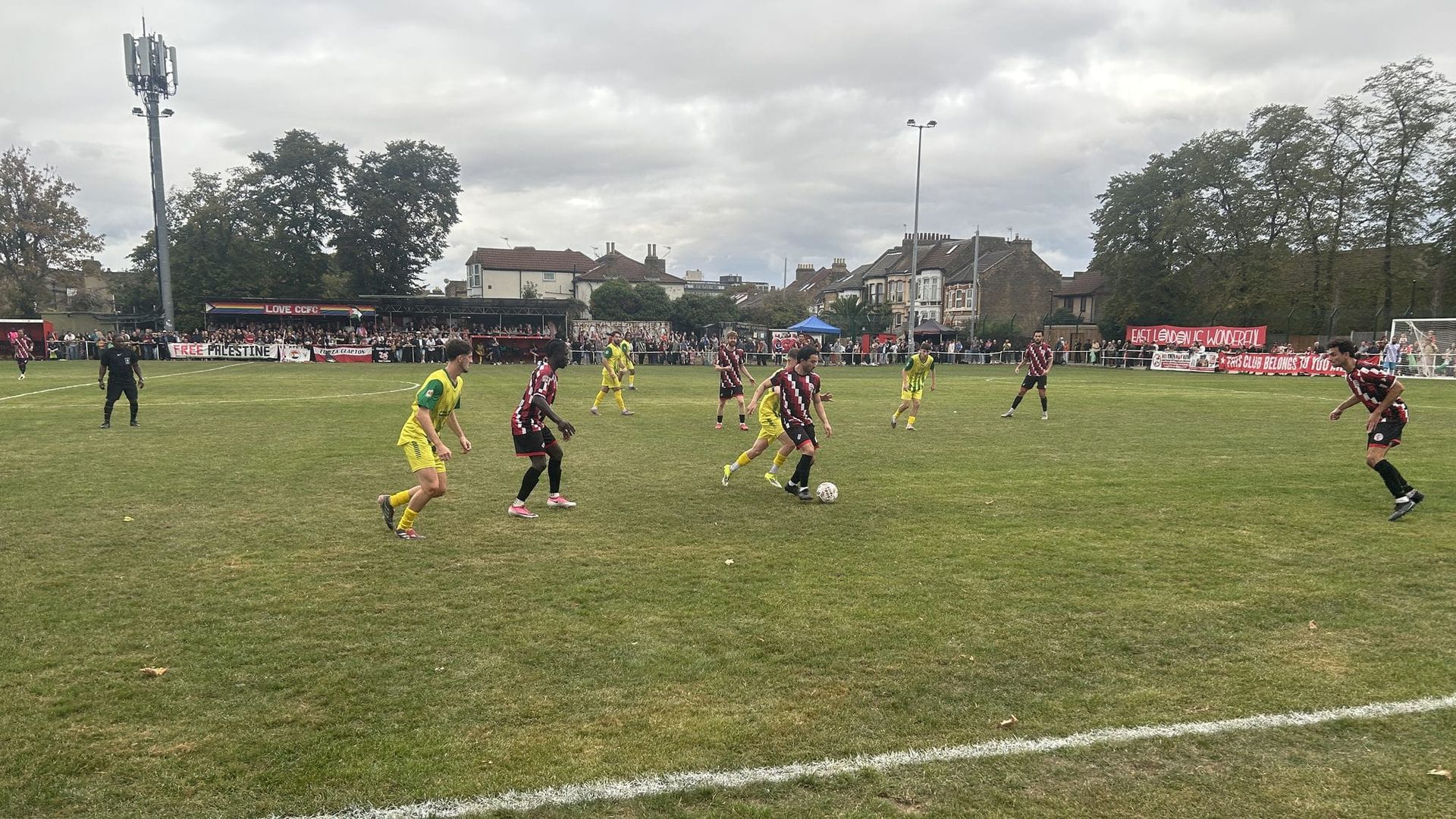
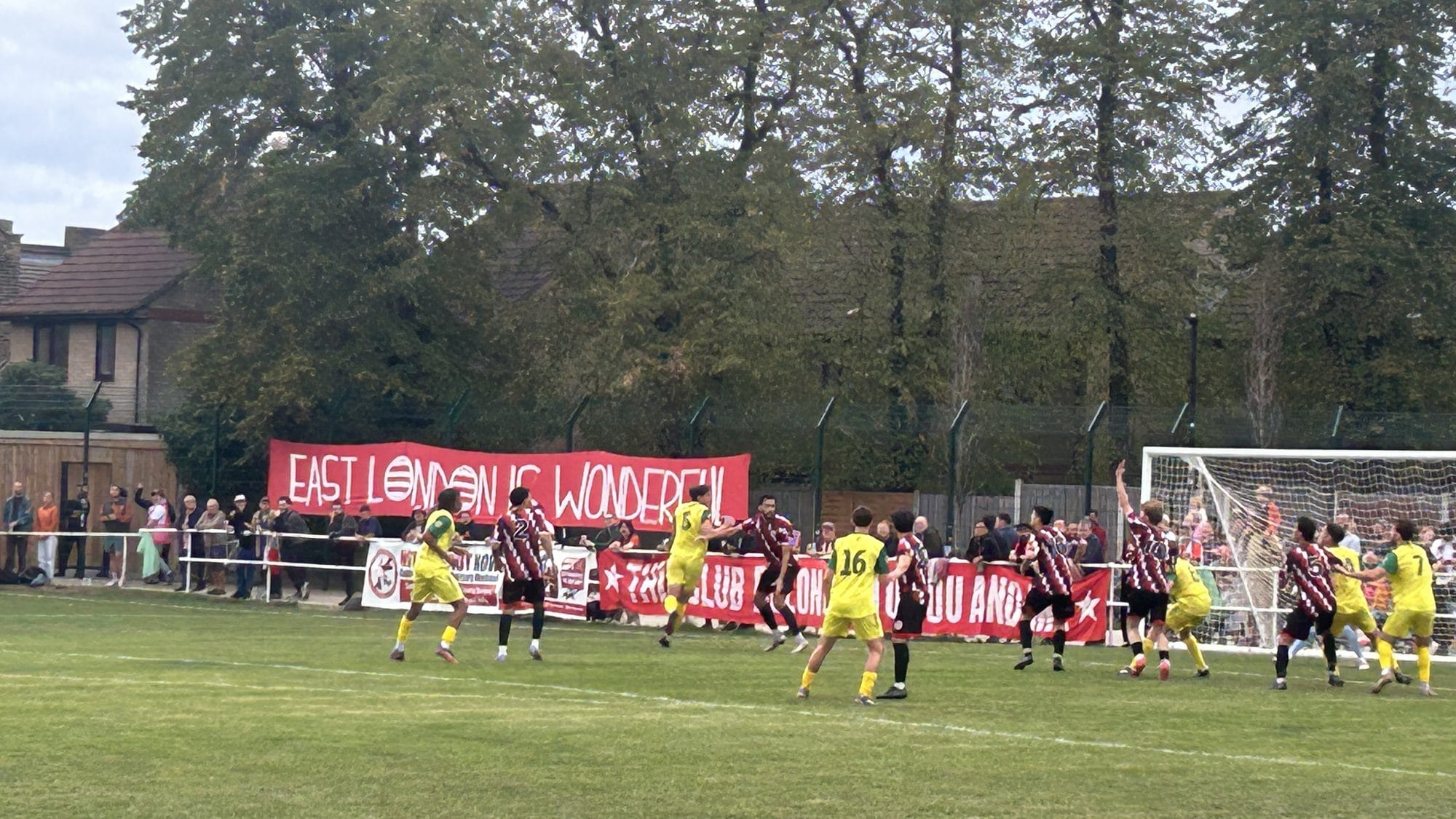
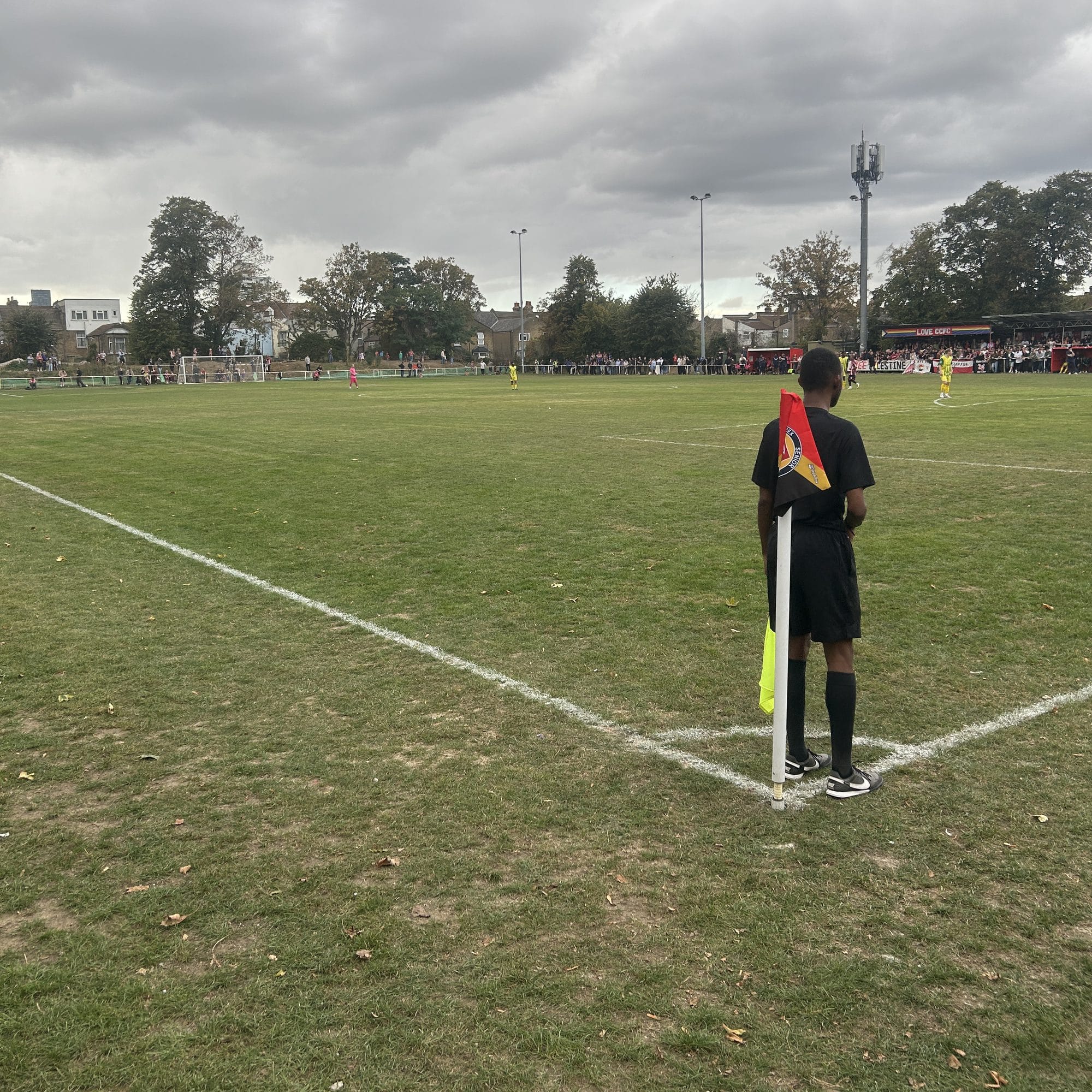
I cycled there from Hackney on my single speed. Through Victoria Park, into Hackney Wick, across the sleek bit of the Olympic Park, and out into old Stratford, where the sleek runs out. I locked my bike to the fence that runs around the ground and went to find the gate.
I'd become a member of Clapton CFC a while back without really thinking about it. A few pounds, a form, an email confirming I was now part-owner of a football club. Today was my first game.
It felt like an apt weekend for it. The past week Manchester City had been found guilty on 114 of the Premier League's 115 charges of financial irregularity, nine months after the hearing ended, and there were no Premier League games on anyway.
Two Claptons
The Old Spotted Dog is the oldest senior football ground in London. Clapton played the first match there in September 1888, beat Old Carthusians 1-0, and 4,000 people watched. Arsenal, Spurs and West Ham have all played there since. So has Ajax.
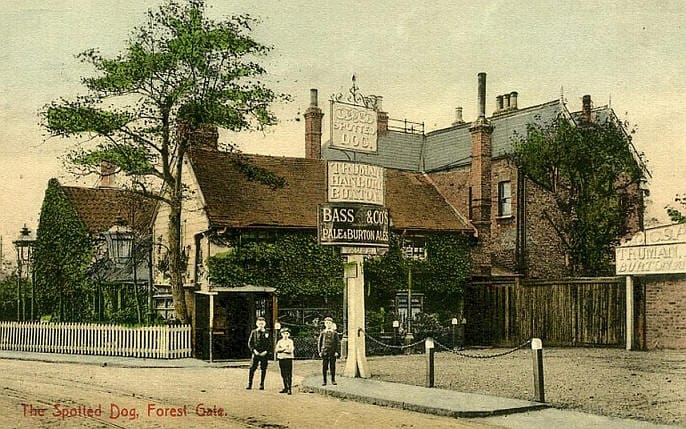
There are two Clapton clubs, which takes a minute to get your head round - especially after you learn that Clapton don’t play in Clapton (the ground is in Forest Gate). Clapton FC is the old one, founded in 1877, which played at the Old Spotted Dog for over 130 years. Clapton CFC, the Community Football Club, is the one I joined. It's eight years old.
A decade or so ago the old Clapton FC was getting crowds of about 14, until a group of fans started turning up with flags and songs and the numbers began to climb. In January 2016 Neil Fredrik Jensen, who writes the Game of the People blog, took the train to Forest Gate to see what the fuss was about. He met some doubters. A sceptical school of thought, he wrote, had it down as "a kind of football flash mob", a passing phase.
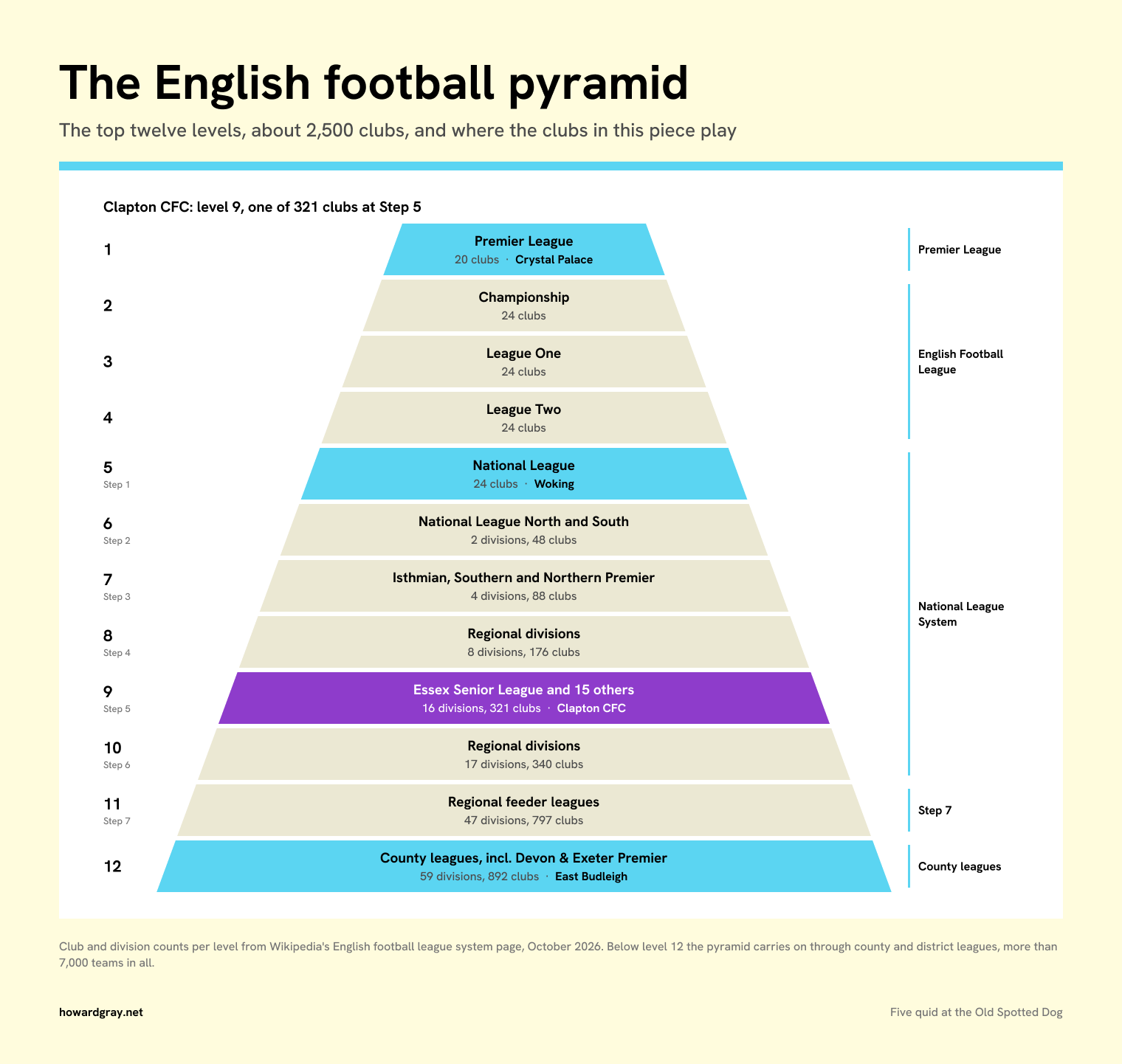
Two years later those fans left the old club altogether. In January 2018, fed up with how it was being run, they set up Clapton CFC: one member, one vote, low prices, owned by the people who turn up. They spent their first seasons in exile, then bought the freehold of the Old Spotted Dog in 2020, and were back playing there by 2023. The old Clapton FC stopped playing in 2024. The new one’s first team is in the Essex Senior League, Step 5 of the English football pyramid, and it's £5 to get in to watch a game.
Once inside, I considered a beer, then saw the queue. Dotted about the place were lots of kids - most of them under 10 - and a good number of them in Clapton shirts, which I liked more than I expected to. Round my way in Hackney it's about 98% Arsenal. Far fewer kids are walking around in the colours of a team their dad can watch for a fiver.
That's not how non-league usually looks. "The traditional non-league crowd is aged between 50 and 60 with the odd little lad accompanying his Grandad," Jensen wrote on that same trip. Most clubs, he said, would see their crowds die out unless they found younger fans. Clapton was already the exception back then.
There were also a lot of Brooklyn dads, or whatever the London equivalent is, and a good turnout of Hackney hipsters (whether they were actually from Hackney, I have no idea). I felt a bit self-conscious. Eight years in Brooklyn and now living in Hackney, I was the cliché twice over. Clapton gets called a hipster club, like Dulwich Hamlet over in south London.
I guessed the crowd at 600. That evening I found the real figure on the club's Twitter account, which I'd have guessed had 5-8,000 followers. It has 30,000. The crowd was 1,117, nearly three times the average in the Isthmian League, which is two divisions higher. Clapton’s record, 2,375 against Rayleigh Town, was set in May.
¡No Pasarán!
I took up a perch behind the goal, next to the club shop. In the shop doorway a couple were sizing up a home shirt, in Spanish.
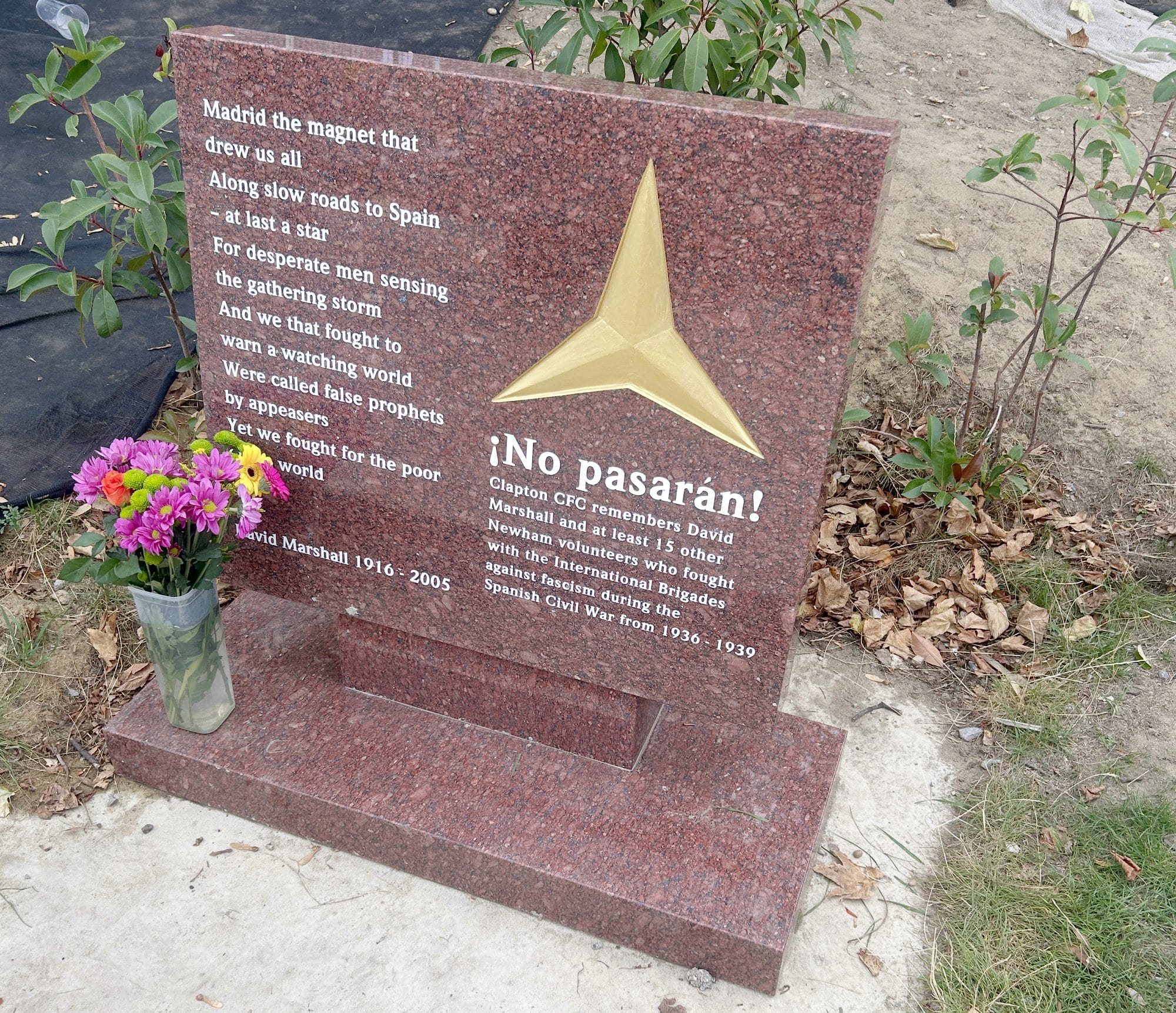
In its first season the club ran a competition to design an away shirt marking 80 years since the end of the Spanish Civil War. Sixteen people from Newham went to Spain to fight Franco with the International Brigades. The winning design used the purple, red and yellow of the Second Spanish Republic, the three-pointed Brigades star, and "¡No Pasarán!" across the shoulders. A club that low down would have expected to sell a few hundred. It sold 11,500 in the first season, 5,500 of them to Spain, and over 20,000 since. The money paid for a memorial to the sixteen Newham volunteers, which Billy Bragg helped unveil at the ground in April 2025. That memorial is where I'd been standing.
A touch left of me
Clapton's ultras gather on the scaffold stand, a terrace along one side of the ground built from scaffold poles. They sing that they're anti-fascist, and they kept singing for most of the afternoon.
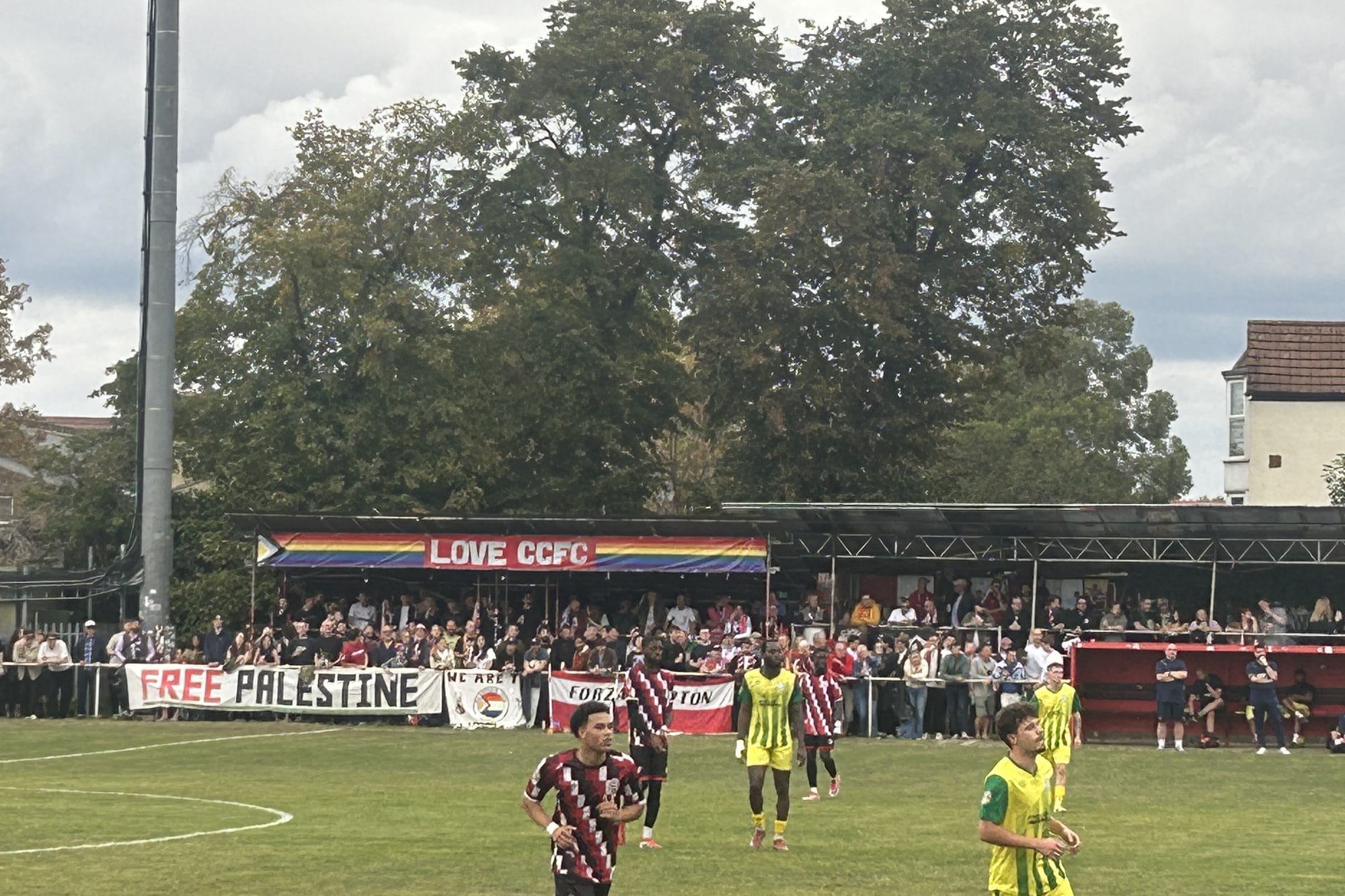
Ultras are an Italian invention: organised groups with drums, flags and choreographed displays, singing for the full ninety minutes. They're a different thing from the English hooligan firms, and English football has never really had them. Their politics run in every direction. Livorno's ultras fly Che Guevara flags. Lazio's are known for fascist salutes. Clapton's take their lead from St Pauli in Hamburg, where squatters and punks took over the terraces in the late eighties, when the far right was running German football's stands. Clapton fans have since played in the anti-racist tournament St Pauli hosts at the Millerntor, its stadium.
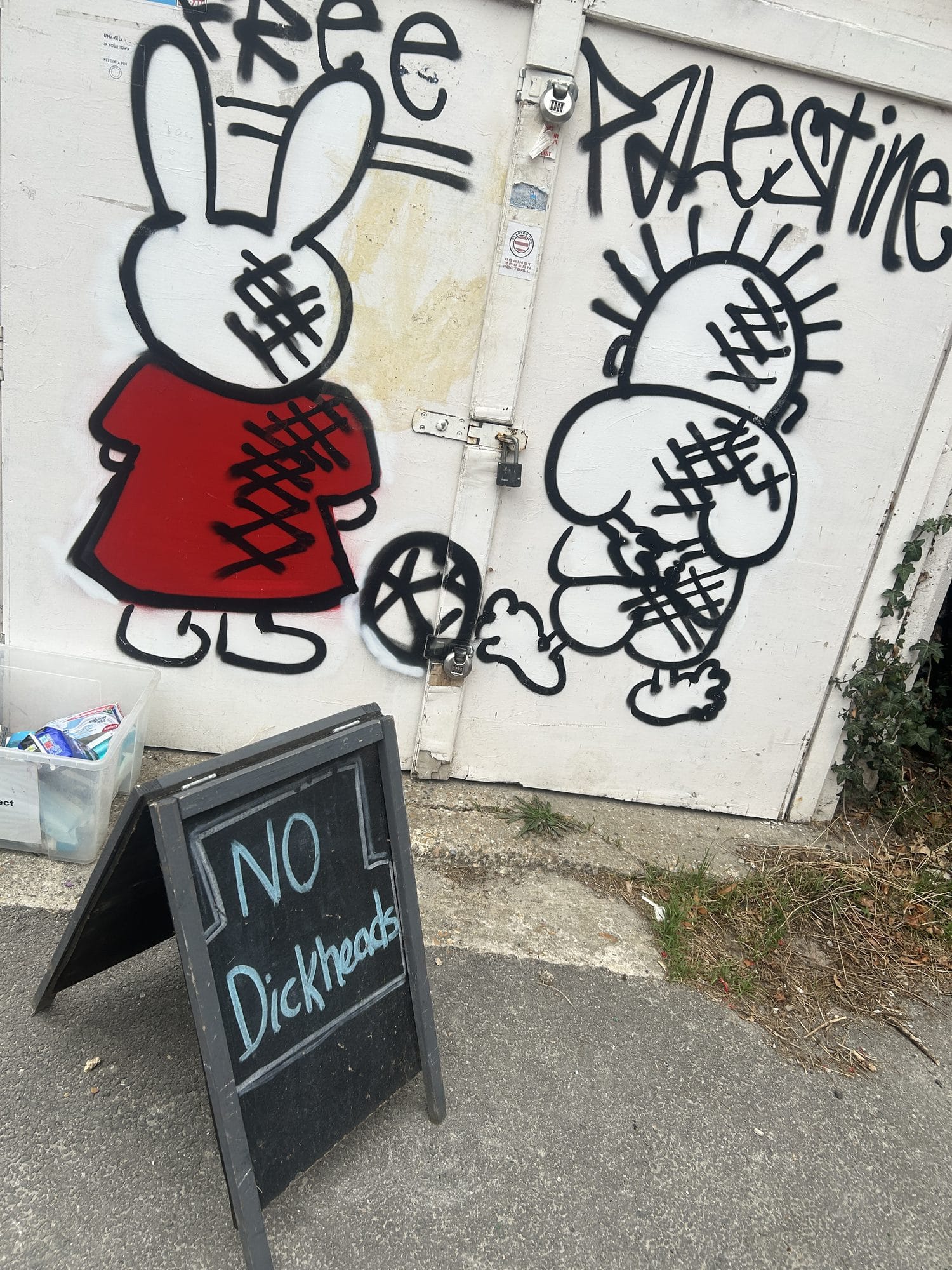
Members voted to back the Palestinian boycott campaign, and last year they unfurled the biggest flag in the club's history, which was Palestinian.
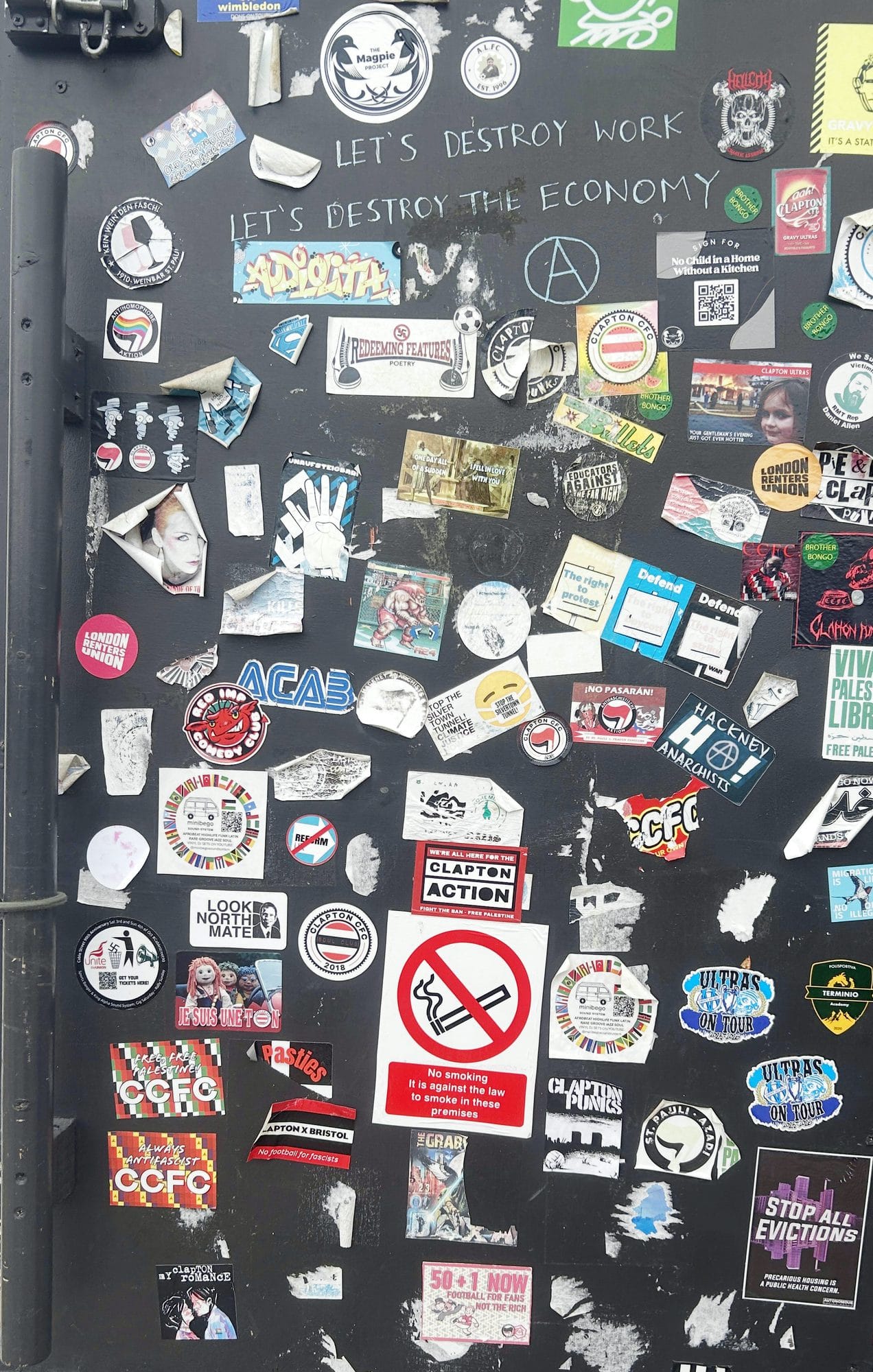
I'd never heard "Free Palestine" chanted at a football match before today. The politics overall are a touch left of mine, and a lot more out loud than I'd go. It felt a little odd at times, maybe too overt for my taste, yet good too. It's also unusual. In Spain, Italy and Germany plenty of clubs wear their politics like this. In England a handful do, Dulwich Hamlet and Whitehawk in Brighton among them, and hardly any this far down the pyramid, where most clubs are busy enough keeping the lights on and work hard to say nothing at all.
Is some of it a performance? Probably. I'm hardly one to talk. I came on a single speed. But a performance usually stops when it gets expensive, and this lot left a club, bought a ground and had a cup final called off rather than take a flag down.¹
From the bedroom window
I've never understood the die-hard fan, and I was never any good as a player. Football, in a line usually credited to the Italian coach Arrigo Sacchi, is the most important of the least important things, and I've mostly filed it under least important. And yet I was coaching at 13 and refereeing at 14.
My dad never liked football. He still took me to my first games, at Crystal Palace between 1993 and 1996. He supervised the coaching, and he picked me up from the refereeing. I looked older than I was, but the parents on the touchline knew I was a kid, and they gave me terrible abuse anyway. After a couple of particularly bad games I was close to tears by the time he came to get me. He'd always preferred rugby, and after that he preferred it even more.
Around the same time I was going to watch Woking a lot. They were the closest thing to a pro team in the local area, and with Palace at around £25 even then and Woking at £6-8, it was perfect for a teenage fan. They were in the Conference then, now the National League, one step below the Football League. There were crowds of 2,000 to 3,500, and it was fun - albeit with (and likely because of) some very colourful language.
Then I stopped completely from 16 to 25. I played a bit in my late twenties, ten minutes from where I live now, as it happens, and again in my late thirties in Brooklyn. I did some kids' coaching, but I never went back to reffing.
I'm still a Palace fan, though supporting a Premier League club is difficult. Matchday mostly means refreshing live scores on my phone. Season tickets sold out long ago, and even as a member it’s tough to get tickets for games. I can't even watch on TV without paying for it.
My dad lives in rural Devon now, in a village called East Budleigh. The village football pitch is visible from the house. We know when they're playing because we can hear the players shouting from the bedroom window. They're in the Devon & Exeter League Premier Division, eleven or so divisions down, with a crowd of about 17. He's started going, and he enjoys it. He says it's cleaner, more enjoyable and less hassle. I agree.
Half watching
At Palace, the Holmesdale Fanatics, the club's ultras, packed it in at the end of August after 21 years. They blamed ticket prices that keep younger fans out, restrictions on what supporters can do in the ground, and years of legal hassle. "We have taken the HF as far as it can go in the current climate," they said. They made Selhurst Park the loudest ground in the top flight, and a fair bit of the Premier League's famous noise was theirs.
I'm not the only one heading down the leagues. By last year, twelve clubs at Step 3 were averaging over a thousand a game, and When Saturday Comes put it down to fans feeling shut out higher up. The clubs doing well, it said, give people "a sense of belonging rather than simply feeling like they are the consumers of a product." Some of it will be cost.
Yes, the Premier League has the noise, the big stadiums and the best players in the world. But it's hard to talk at those games. You're in your seat, facing forward, for ninety minutes. At the Old Spotted Dog you don't need to sit. People wander round the perimeter with a beer, which you can't do at Selhurst Park. It's been illegal to drink in sight of the pitch there since 1985.
Step 5 is still a decent level, semi-pro I guess, with players who clearly care. Nobody seemed too wound up about it, which is a long way from the parents I heard with a whistle in my mouth at 14.
Clapton started the day near the bottom of the table, and a 3-0 win over Great Wakering Rovers is the kind of result that gets a season going. Each goal got a moderate cheer, and then people went back to their conversations. The chanting all afternoon was louder than anything the goals got.
Shoulder to shoulder
One of the students Jensen met on the train in 2016 told him, "I am not sure people go to the game because of the football. It's a social thing." He meant it as a worry. Ten years on, I'd say it's the best thing about the place.
There were plenty of women there, of every age. Even so, it felt like a place where men come to talk to each other. Groups of guys, anywhere from their twenties to their sixties, some in pairs and some ten-strong, stood about chatting with half an eye on the game. The pairs walked half a lap of the pitch, stopped by the pitchside barriers for a bit, turned round when the crowd made a noise, then carried on. The bar queue was the same: at least twenty minutes, most of it spent talking, and nobody in a hurry to get back to the game.
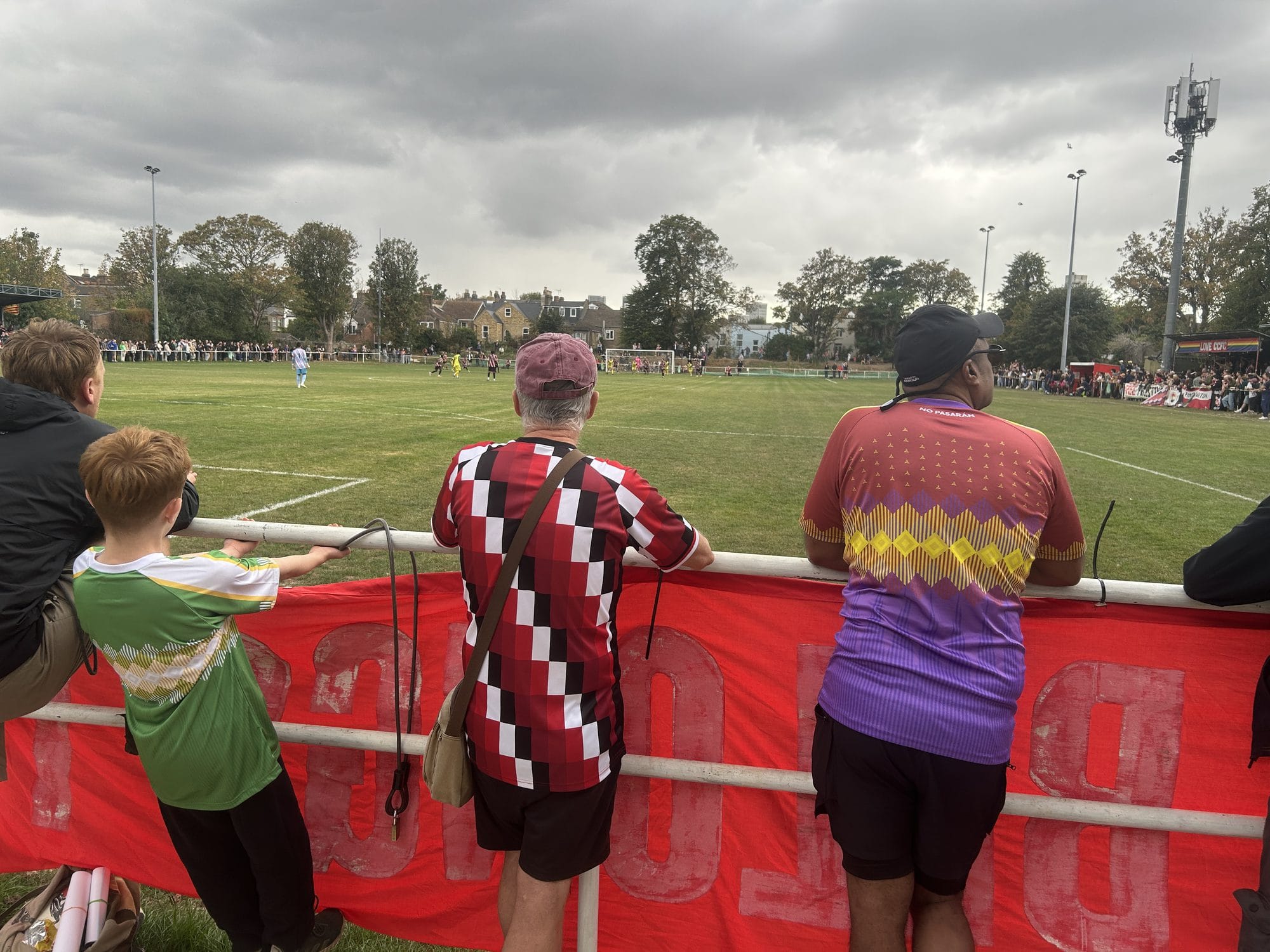
The Men's Sheds movement says men talk shoulder to shoulder, not face to face. Give two blokes something to look at side by side and the conversation comes more easily than it would across a table. A football match might be the oldest version of that going. There's always something to watch when the talk runs out, and nobody minds if you look away when it starts up again.
Some people take this seriously enough to put it on prescription. Around Stroud, where Forest Green Rovers play, GPs at about a dozen surgeries can prescribe match tickets to people with mild to moderate depression, as an alternative to antidepressants. It's aimed especially at men.
Plenty of men lose touch with their mates somewhere along the way, and there aren't many places left where you can just turn up and stand next to them for a couple of hours. My guess is it's a big part of why Clapton keeps getting a thousand people through the gate, and why I'll be back.
As I write this, England have just won 7-0 in the Nations League. I'm not sure I care. I was more interested in the Essex Senior League results, and in how East Budleigh got on.
P.S. I played the night before, five-a-side against guys all under 30. I just about held my own. We didn't speak much.
¹ In May 2025 the Clapton CFC women's team were 2-0 up in a regional cup final against Dulwich Hamlet Reserves when it was called off. The host ground objected to a Palestine flag among the Clapton fans and an anti-genocide banner from the Dulwich end. Both sets of fans stayed and sang together. (Sports Gazette)
Member discussion