a16z, Scott Galloway and Paths to Power

Two email newsletters arrived last week, three days apart. One was from a venture capital firm opening a school. The other was from a professor defending college. You'd expect them to disagree. I'm not sure they do.
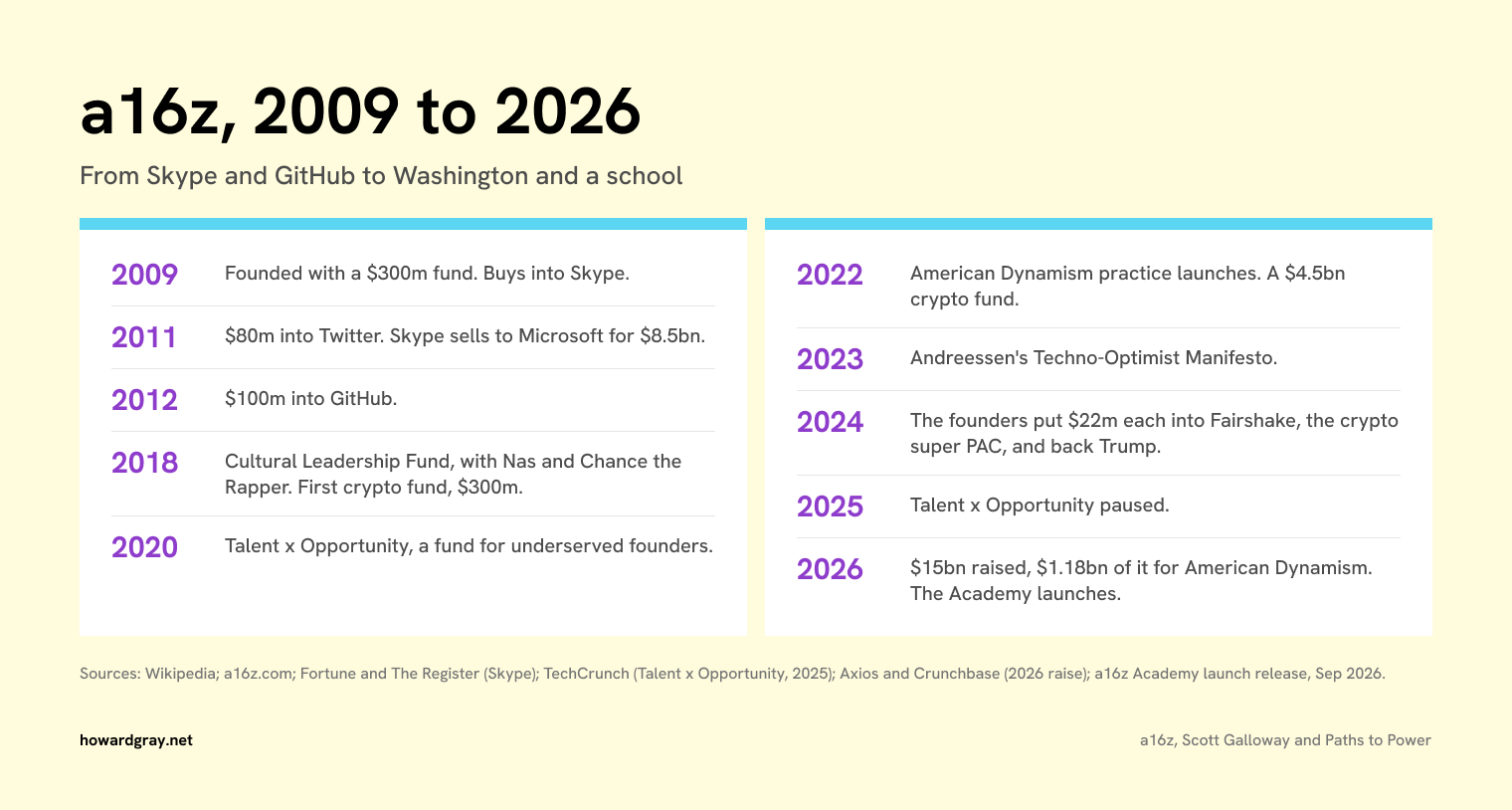
The firm is a16z, which is ‘Andreessen Horowitz’ with the sixteen letters in the middle taken out (venture capitalists are busy people). Marc Andreessen and Ben Horowitz started it in 2009, and it made its name backing the likes of Skype, Twitter and GitHub.
Its new school is the Horowitz Andreessen Academy, in San Francisco, for young people coming out of high school. Its first class will be about fifty, chosen on what it calls "proof of work: what they have built, shipped, or earned." There are placements at Anthropic, OpenAI, Google, Stripe, Palantir, Anduril and a few others, and - naturally - courses taught by founders. TechCrunch described it as Y Combinator and the Thiel Fellowship having a baby, which is quite the image.
Everywhere millionaires
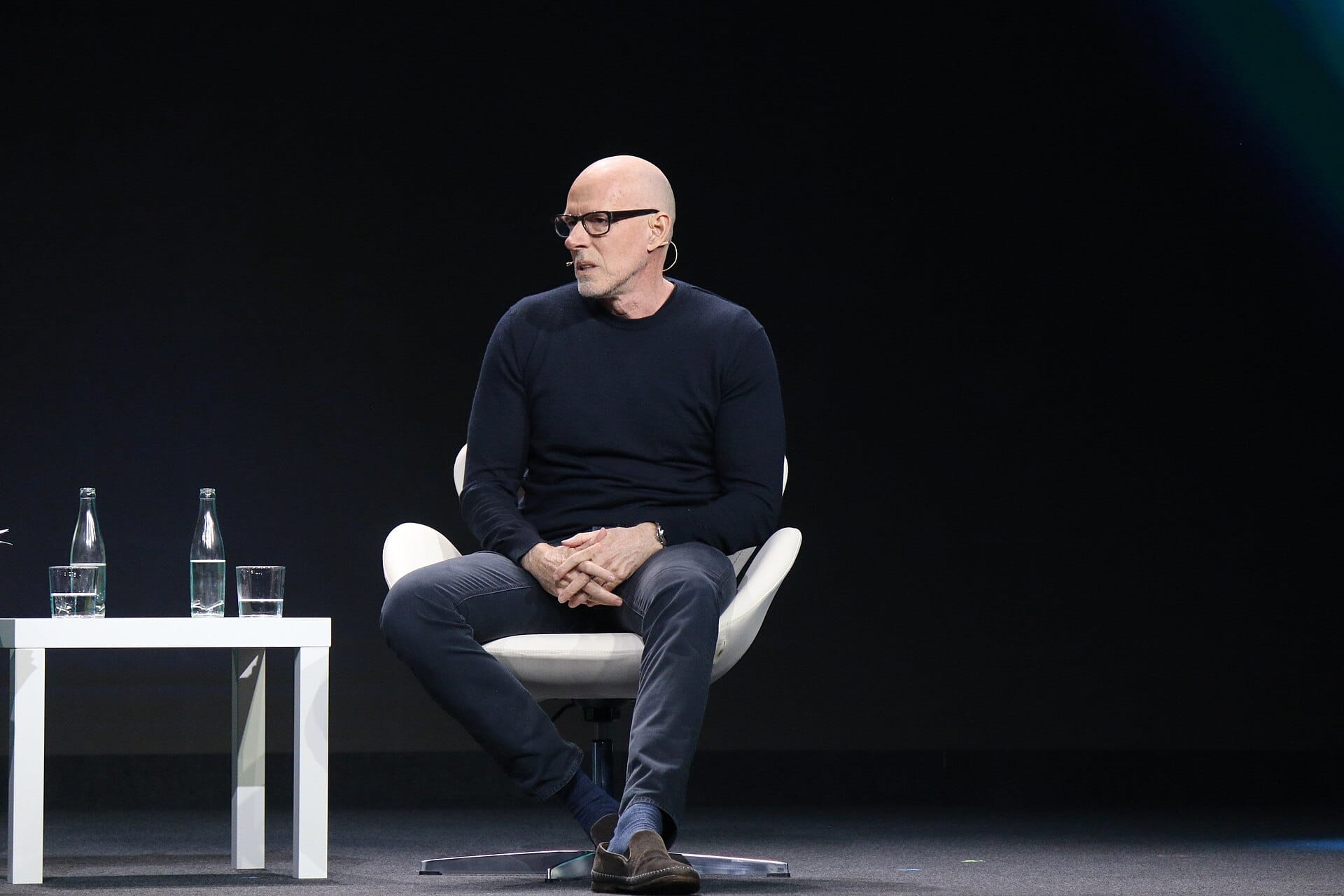
The second email had nothing to do with a16z. It was Scott Galloway's weekly newsletter. If the name means nothing to you: he teaches marketing at NYU, and he's also a serial founder, bestselling author, co-host of Pivot with Kara Swisher, and about as internet famous as a marketing professor gets. In July, California's governor appointed him a regent of the University of California, so he now helps oversee the thing he's defending.
This edition was about what two economists, Owen Zidar and Eric Zwick, call ‘everywhere millionaires’: the HVAC contractor in Memphis, the boat-cover maker in the Ozarks, the former Marine who opened a hot dog stand in a 12-foot trailer and sold it, fifty years later, for nearly a billion dollars. (Yes, you read all those numbers correctly.) The typical one went to college, though not an elite one. "One of the most corrosive narratives aimed at young people," Galloway writes, "is the lie that college is obsolete, unnecessary, or a scam."
a16z wants the brightest kids to skip university. Galloway wants far more kids to go. I read both emails back to back and wrangled with them a bit. And the more I read, the closer together they got.
Other pivots
I should say that I was a fan of a16z, and the way they went about things. Ben Horowitz wrote honestly about what he called The Struggle ("The Struggle is when people ask you why you don't quit and you don't know the answer"), which is not how most investors talk about building a company. I enjoyed Marc Andreessen on Brian Koppelman's podcast, The Moment. A year or so ago my studio even applied to one of their programmes. (They turned us down. No hard feelings, though. Mostly.)
I suppose it felt like a different kind of firm. Horowitz's management book, The Hard Thing About Hard Things, is full of lyrics from Jay-Z, Kanye West and Nas, which isn't something you can say about many management books.
In 2018 the firm launched a Cultural Leadership Fund, with Nas and Chance the Rapper among its backers and its fees going to nonprofits getting more Black Americans into tech. That fund is still going, to its credit. In 2020 it started Talent x Opportunity, a fund for underserved founders. In October 2025 the firm paused it and let staff go.
Somewhere in the past five years, the emphasis moved. The founders put $22 million each into Fairshake, the crypto industry's super PAC. They came out for Trump in 2024, with Horowitz saying "the future of our business, the future of technology, and the future of America is at stake." In January the firm raised $15 billion, more than a billion of it for a strategy it calls American Dynamism.
a16z would probably say there's no contradiction. You can back Nas and still back the laws your industry needs. Maybe. But from where I'm sitting, the weight has shifted, from culture towards Washington.
The Academy's chief executive, Gagan Biyani, has made a pivot of his own. He co-founded Udemy, where anyone could teach or take a course online, and later Maven, a platform for live online courses that a16z backed. He's spent most of his career making learning more open. Now he's running a school for fifty. There may well be a good answer to how those fit together. I just don't know what it is yet. (Gagan, if you're reading, I'm all ears.)
America
As for Galloway, well, I gotta admit I quite like him. He can be a lot (he'd probably take that as a compliment), but his heart is in the right place, and this newsletter shows it. It's a love letter to America, of a very American kind. "America is a millionaire factory." Not every country would hear that as praise. Galloway says America's "greatest export isn't software, weapons, or entertainment. It's the millionaire." College is how you make them, and they go on to "pay taxes that fund the Navy, food stamps, and education for future generations."
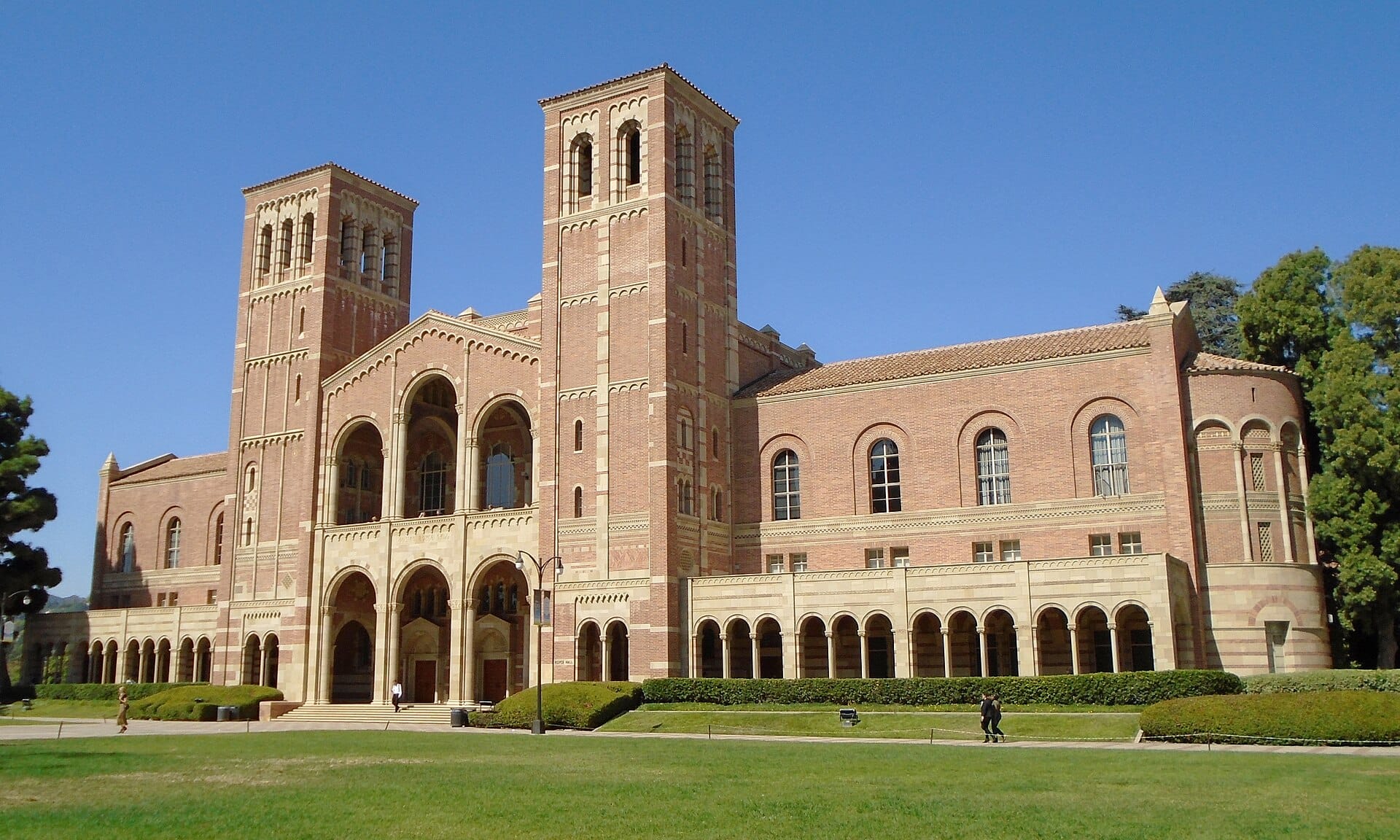
He ends on his own story, an unremarkable kid from a lower-middle-class home in 1970s California that the state bet on anyway. "Everything I have is the return on that bet." He's shared this riff a bazillion times. Fair play to him: he knows the value of a brand. It's a slightly tidy version, too. UCLA let him in on appeal, and after that came Morgan Stanley, a Berkeley MBA and a string of companies he started himself. College got him started; he did a lot of the rest. Still, I mostly hear him.
American Dynamism
a16z's American Dynamism practice backs companies "that support the national interest", from defence and aerospace to housing and education. The 2022 launch essay talked about making America "the country people want to be from, immigrate to, and build a life and career or company in." The practice's page now says "America has repeatedly secured geopolitical dominance by mobilizing capital and talent behind transformative technologies, from the atomic bomb to the internet."
Katherine Boyle, who co-founded it, has said that when she joined the firm, "America" wasn't a word you heard people in Silicon Valley say very often. You hear it a lot now. A lot. The Academy isn't formally part of American Dynamism, but education is on the practice's list, and you can see the family resemblance in a partner list that runs from chatbots to defence contractors.
So Galloway and a16z, from opposite ends of the American argument, agree on what school is for. School makes the country richer, or stronger. Where they differ is who to bet on. Galloway puts it plainly: "The most American thing we do isn't crowning an elite class of billionaires, but manufacturing millions of unremarkable millionaires." a16z is crowning fifty, and presumably hoping a few of them become billionaires.
Meanwhile, elsewhere
I lived in New York for nearly a decade, and these days I feel transatlantic, somewhere between the UK, Europe and the US. With a foot on each side, what strikes me is how American both emails are. Nothing wrong with that. Galloway is defending American public universities. a16z is building for what it calls the national interest. So of course they're about America. But read together, there's barely a hint that anyone else in the world is trying to work out what school is for.

Last year I wrote about making it in America as an outsider, built around the contradictions that make the place both exciting and baffling. Two of them were meritocracy alongside gatekeeping, and an obsession with scale alongside all the talk of starting small. a16z's school has both.
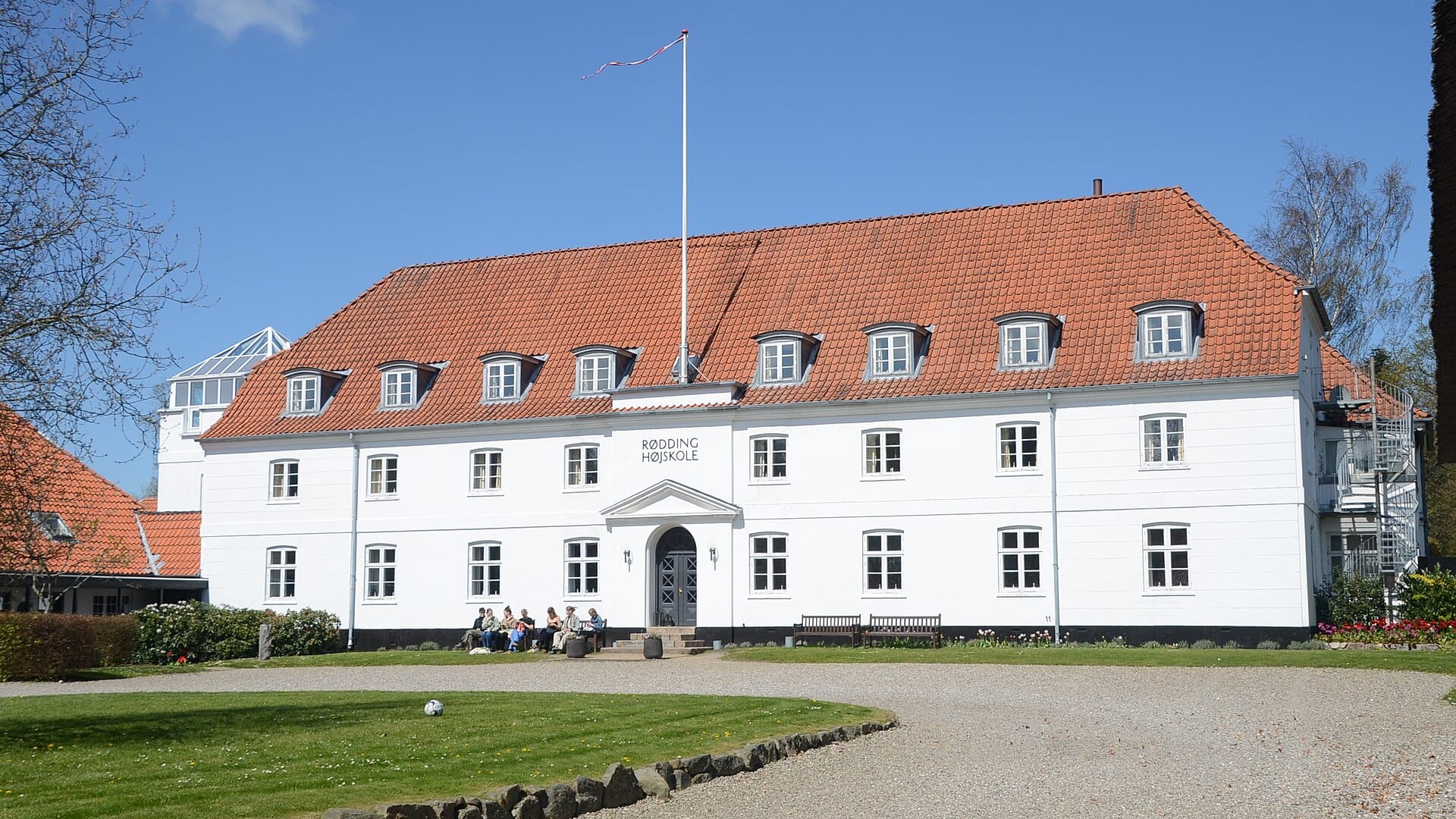
Plenty of countries have their own answer. Denmark has been at it for nearly two centuries. Its folk high schools, inspired by the pastor and poet N. F. S. Grundtvig, have no exams, no grades and no degree at the end. About 10,000 people a year go for three months or more, and another 40,000 or so for shorter courses, to study film or politics or sport and live alongside people unlike them. Grundtvig thought people had to learn to bear each other's differences before they could learn much else.
Others have changed who gets a go. In 2001 Sciences Po, the Paris school where Mitterrand, Chirac, Hollande and Macron all studied, let pupils from schools in poorer areas skip its notoriously hard entrance exam. Their teachers put them forward and they were interviewed instead. It started with seven schools and now works with more than two hundred, and over 3,000 students have come in that way.
In India, NavGurukul was started in 2016 by an IIT graduate and a self-taught programmer who never finished school. It runs a free year-long course in software for 16 to 25-year-olds from low-income families, many of them young women, who live on campus while they learn.
And that's before you get to the Open University in Britain, the BRIT School in Croydon, Ashesi University in Ghana, School of Code in Birmingham or 42 in Paris.
University is slow
I hated university, personally, though that may say as much about my own schooling and background as about university. (Sorry, university. And mum and dad. And that lecturer I moaned about. And and.)
I still talk to professors at business schools in Berlin and Barcelona, and at universities in New York and Arizona, who'd like to teach differently and say the machine won't let them. University can be amazing. But most of it is slow, still runs on the lecture, and costs a lot more than it used to. (Average in-state tuition at an American public university has roughly doubled in thirty years, after inflation.)
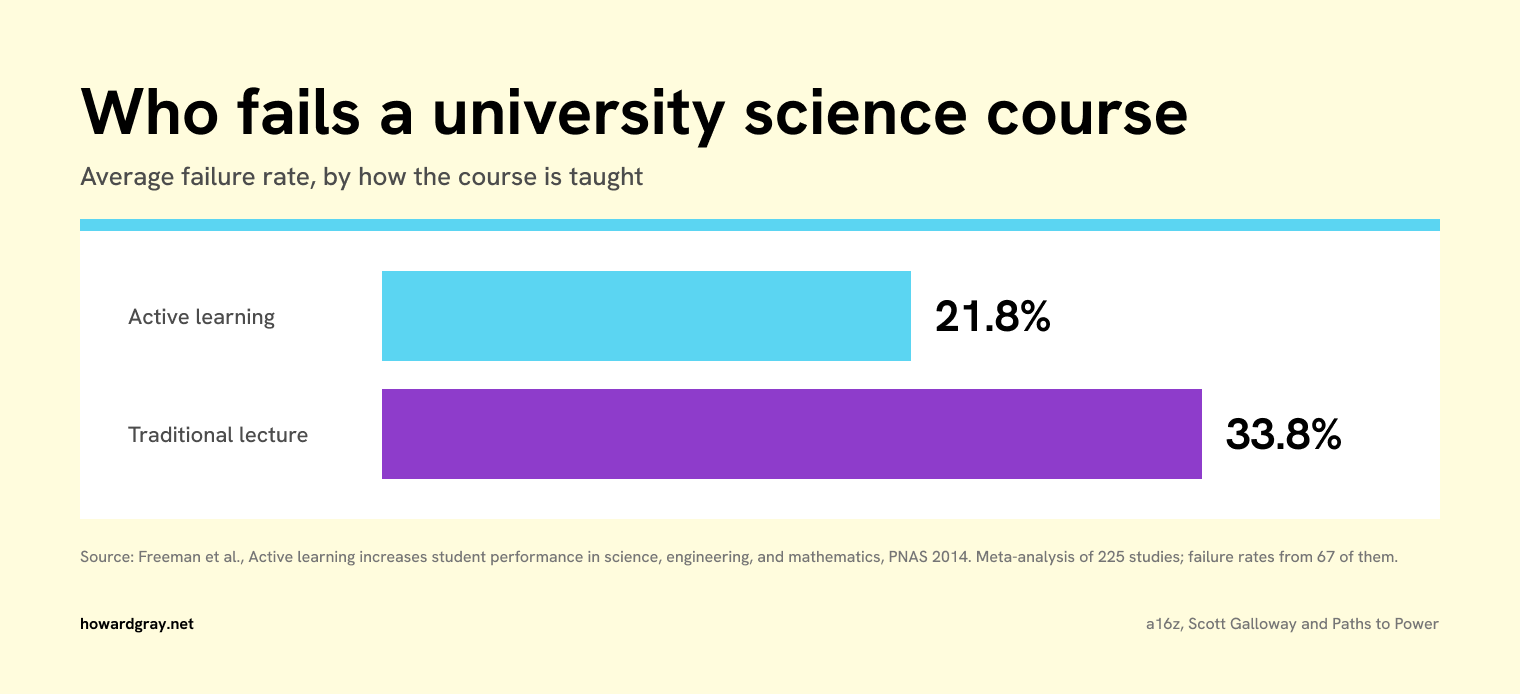
A 2014 review of 225 studies of university science courses found students in traditional lectures were one and a half times more likely to fail than students in active learning classes. On how it teaches, I'm closer to a16z than to Galloway.
Galloway's fix is to widen the door to the same building. And under all the jokes, he really does care about who gets through it. "If stupid is hurting other people while hurting yourself," he writes, "smart is helping other people attend college." But there's some nostalgia in it. College worked for an unremarkable kid in 1970s California, and a lot of the building hasn't changed much since.
Proof of work
I'd sign up to a lot of the a16z model. Learning by building. Real placements. Teachers who've done the job. Projects you pick yourself. I've been banging on about most of that on this site for years (regular readers will be very bored of it), and Wavetable, my studio, was started on those ideas and still runs on them.
Then I read who it's for. The plan is to find the best and brightest and give them more.
I'm all for proof of work. It's what we look for at Wavetable too. But at eighteen, proof of work mostly tells you who had the time and the room to build something. A decent laptop. A quiet bedroom. No Saturday job. Parents who could afford to let you try.
The Academy itself is free, but you have to live in or near San Francisco for the year, and while it will suggest places to stay, the rent is on you. Each student does get more than $50,000 in computing credits.
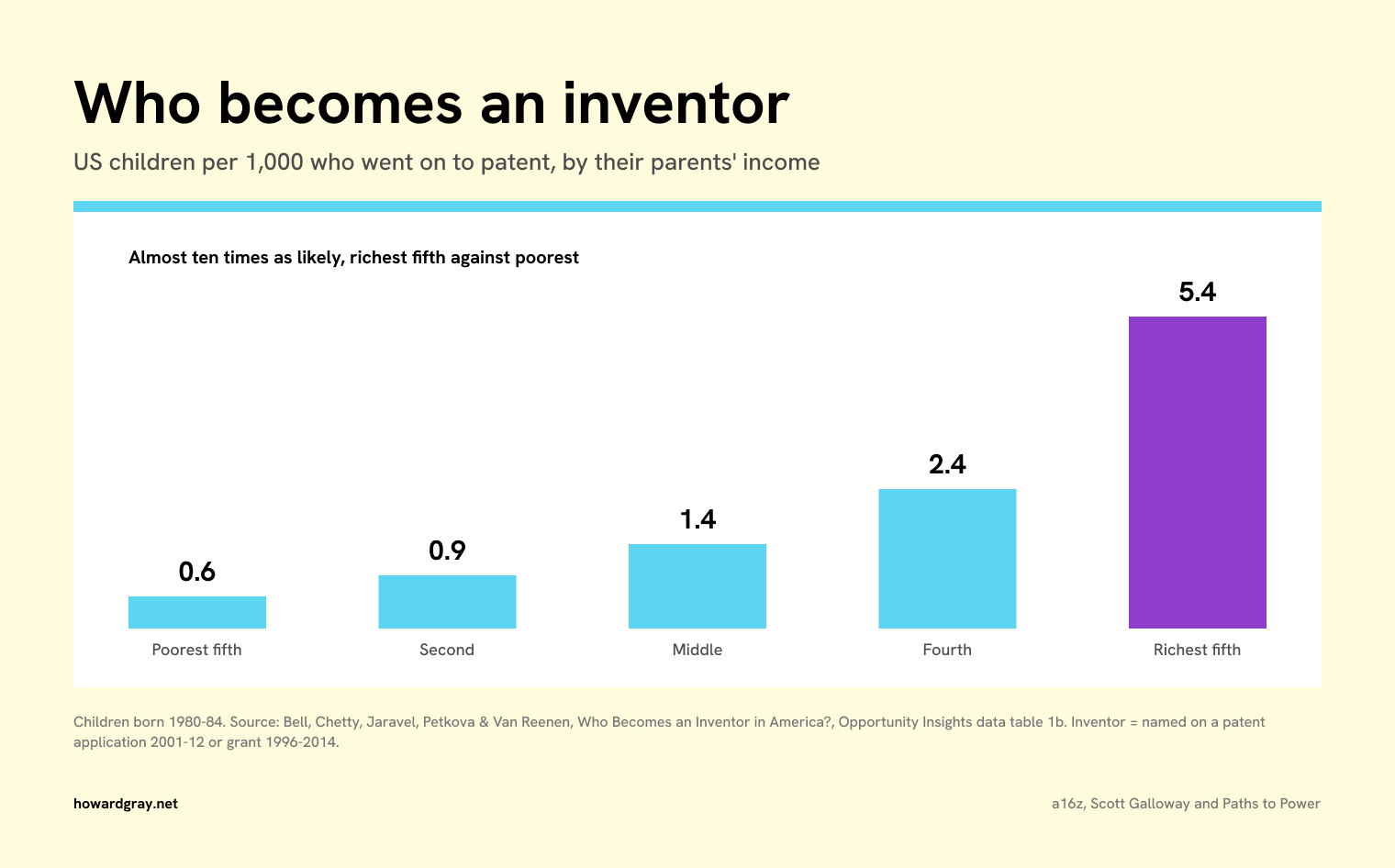
The Harvard economist Raj Chetty and his colleagues found the same pattern in patent records. Children from the richest 1% of American families are ten times as likely to become inventors as children from families below the median, and childhood test scores explain relatively little of the gap. They called the ones who went missing "lost Einsteins".
Startup lore says a16z is doing it right. Peter Thiel's advice in Zero to One is to start with a small market, dominate it, then widen. Fifty students is a small market, and Y Combinator's first batch was eight companies. You're right. This may be a first run, and it's unfair to judge it as the finished thing. Though I'd still say the only next step anyone has announced is the two-year version in 2028, at elite-private prices, and I haven't seen anything about more places.
So the gap gets wider. The people who started ahead get the placements, the founders on speed dial and a route round university altogether. Everyone else gets the system Galloway is trying to open up. I'm not convinced either is much of an answer for most eighteen-year-olds.
Paths to Power
Two of the a16z Academy's courses are named as "central to the curriculum": Interpersonal Dynamics and Paths to Power. If those sound familiar, they're also the names of Stanford Business School's two most famous electives. Generations of MBAs know the first one as "Touchy-Feely". So a school built as an alternative to university has a business school's greatest hits at its centre. I'm not sure whether to be reassured. (Stanford's Paths to Power does at least cover what power costs you.)
There's also The Geometry of Luck, which promises to teach "arranging a life so good fortune flows through it." I'd have signed up for that one at eighteen. And among the guest teachers is Michael Ovitz, who co-founded the talent agency CAA and became one of the most powerful men in Hollywood. Anyone who's worked as an agent knows the name. He knows a path or two.
It depends what you mean by power, of course.
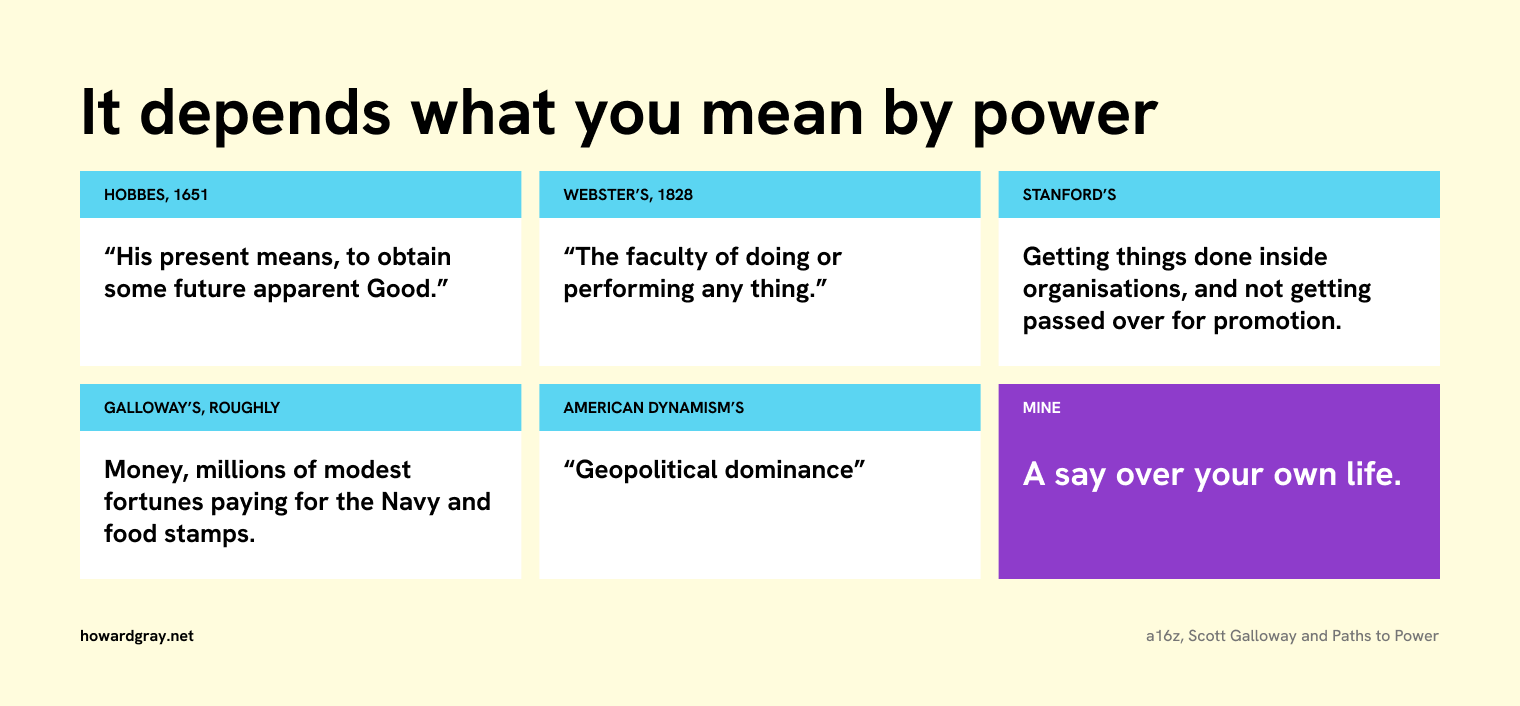
The kind I'd put first for an eighteen-year-old is plainer: a say over your own life.
Everything abundant
The Academy's pitch line is "AI makes it possible to do anything." (Anything is quite a big word.) There's nothing I could find on the published course list about whether you should.
Andreessen's own version is bigger. "We believe in making everyone rich, everything cheap, and everything abundant," he wrote in his Techno-Optimist Manifesto in 2023. Who it's abundant for is less clear.
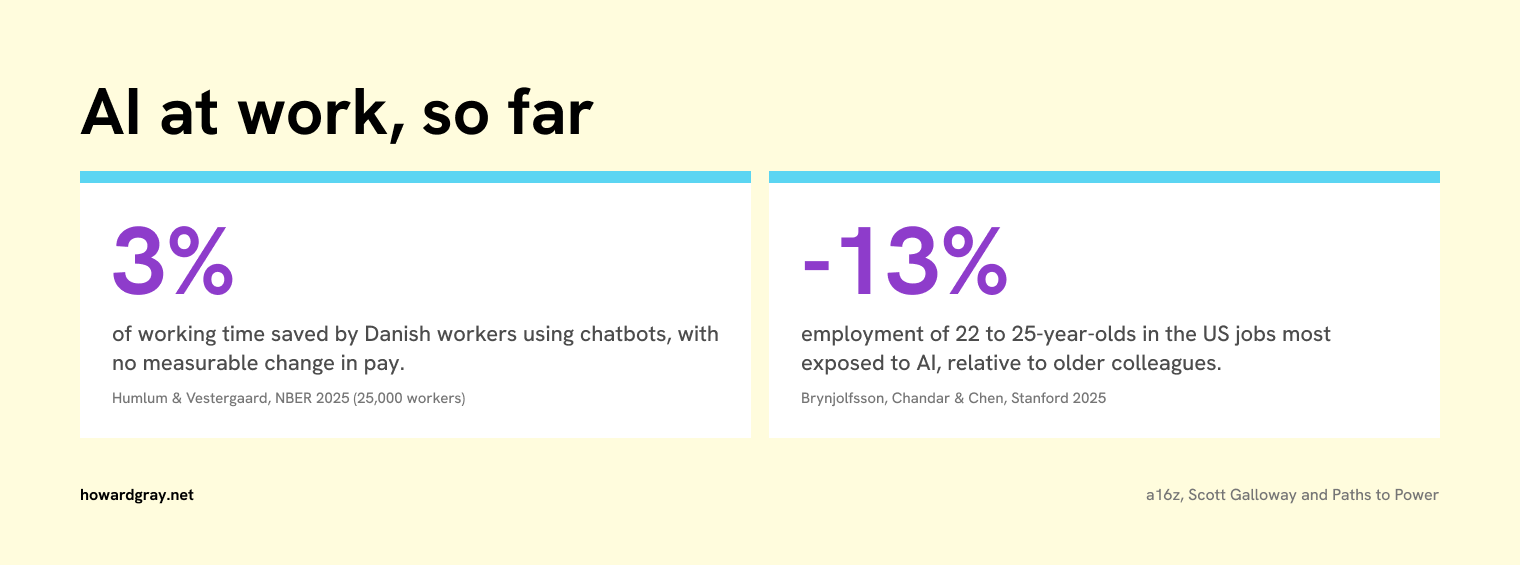
The best evidence I've found so far comes from Denmark, where economists followed 25,000 workers in jobs where chatbots are now common. They saved about 3% of their time, and there was no measurable change in what they earned. Early days, maybe.
But in the US, the economist Erik Brynjolfsson and his colleagues found that employment of 22 to 25-year-olds in the jobs most exposed to AI has fallen by double digits, while older colleagues in the same jobs held steady. If AI can do anything, how does everyone else keep a job, let alone get rich?
Then there's who these students become. If the Academy works, some of them will end up running the companies that decide what AI does, what gets built for defence, what billions of people see on their phones. That's power over people who'll never meet them. For now, the people deciding how they use it are the founders teaching them and the companies they're placed with.
Silicon Valley isn't famous for looking past its own postcode.
What is school for?
Seth Godin asked this question in 2012, in a manifesto called Stop Stealing Dreams. He's American too, and no stranger to selling things (he's written a shelf of books on marketing). But his answer is short. School should teach two things: how to solve interesting problems, and how to lead. And it should help children "develop into something more than a purpose-driven tool for the industrial state."
Swap "industrial state" for "national interest" and it reads like a note to American Dynamism.
Godin didn't stop at the manifesto. In 2015 he started the altMBA, an online workshop with no campus, no exams and no degree at the end. It ran for nine years and put more than 7,000 people from 109 countries through it before closing in 2024. One of the people who built it with him, Wes Kao, went on to co-found Maven with Gagan Biyani, the man now running a16z's school.
Other ways
I'm not neutral. I think higher education is largely broken, and I've taught inside it. Business schools have been selling paths to power for a century, and Stanford's even has the name.
I know the money side too. Wavetable does some work with young people, most of it pro bono, and I wish we did more. The business model is hard. (Ask anyone who's tried.) Which is probably why the two emails come out where they do. a16z's school is a for-profit company with $42 million behind it and corporate partners who want to hire its graduates. Galloway's version needs a state willing to pay, the way California did for him.
And I know how this reads. On Twitter (yeah, I still call it that) there's a whole genre of American tech people calling Europeans "europoors": poorer, slower, buried in regulation, and bitter about it. I don't want to be the europoor moaning at the back. A free year with founders is a good thing for whoever gets in. And if it were my seventeen-year-old who got in, I'd find it hard to say no.
But this is a firm with around $90 billion under management, and the people and the reach to build almost any school it liked. It built one for fifty people, with Paths to Power on the timetable. That's Silicon Valley's usual logic, money and power, applied to eighteen-year-olds. I find it a bit depressing.
Maybe the next one will be different. I'd like it to be.



Member discussion