Groove Theory #24 - The Black Bean Sauce
I'm your host, Howard Gray, founder of Wavetable.
Currently: cycling around the city; sourcing members of Wavetable's new Playtesting Circle - hit reply to join us.
He's cooking the beans wrong. Everyone in the tent knows it except him.
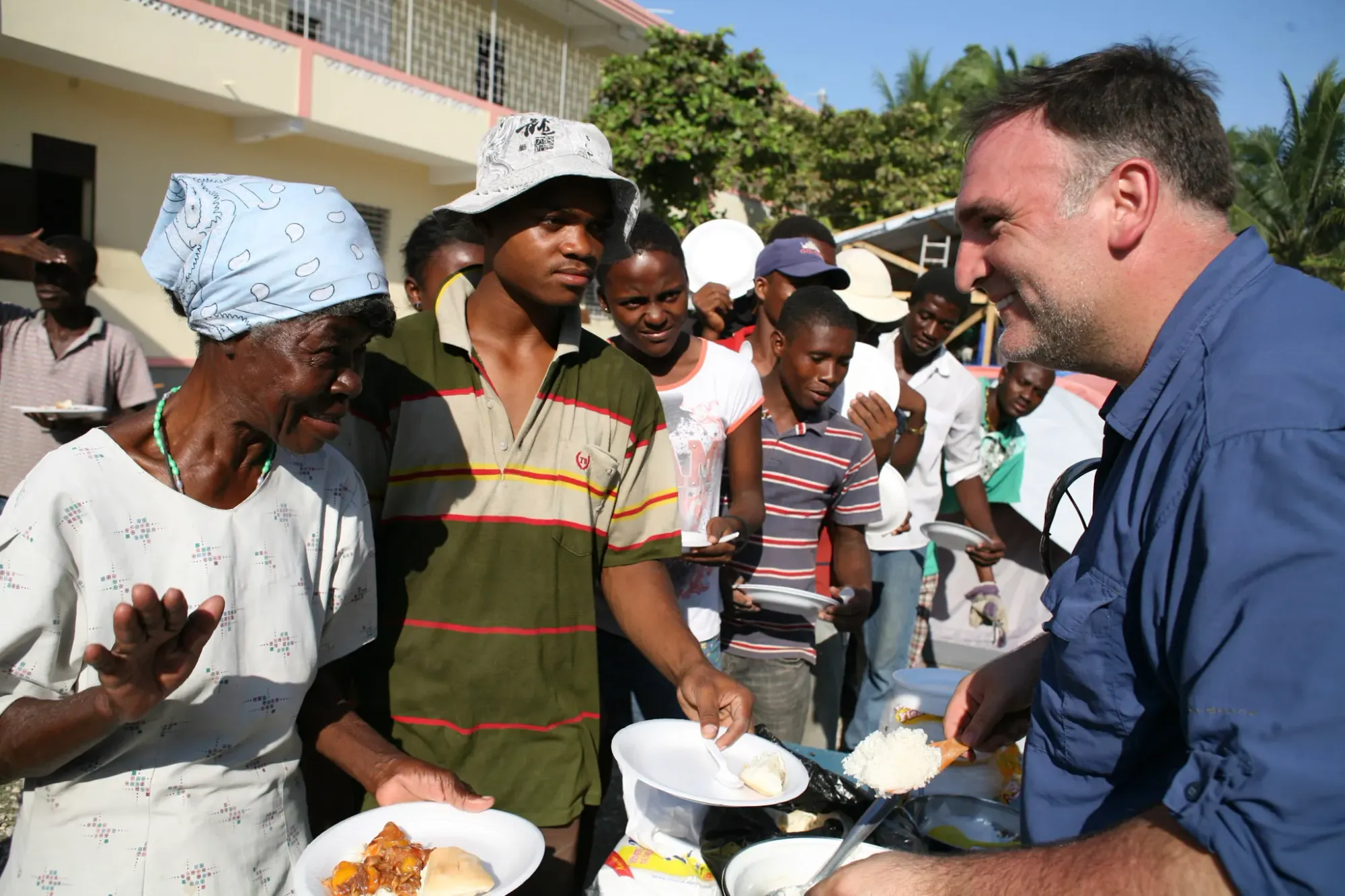
It's January 2010, a shelter outside Port-au-Prince. A few hundred people are living here after the earthquake. And in one of the tents, a chef is making black beans and rice.
The women helping him are smiling. Almost laughing.
He doesn't speak Kreyòl. They don't speak Spanish or English. But he can read a room - the raised eyebrows, the stifled grins.
Those beans he's cooking? Not how they like to eat them.
So he hands over the tools. Show me.
They gather burlap sacks. Push the beans through slowly, sieving them into a smooth, creamy purée: sòs pwa nwa, black bean sauce, served alongside steamed white rice.
"So beautiful and rich and velvety," he later wrote, "this perfect texture that I had never seen before from beans."
The chef was José Andrés - two Michelin stars, dozens of restaurants, the man who introduced America to tapas. He'd come to Haiti to feed people. He left having learned how to listen.
The Tension
José Andrés didn't need to be in that tent.
He'd introduced America to tapas, owned dozens of restaurants, knew how to feed thousands at speed. He could have kept opening restaurants and done very well.
But he went anyway. And when he got there, he made beans the way he'd always made beans.
That was the problem.
The skills were right - logistics, cooking at scale, speed under pressure. The method was wrong.
His two Michelin stars didn't teach him sòs pwa nwa. Only the women in that tent could do that.
Step into it
You're an expert in your field. Then something shifts - a crisis, an opportunity, a context you've never worked in before.
You know your craft. The instinct is to lead with what you know. But the thing that makes you qualified can also make you blind.
What would you have to unlearn?
The Groove: Modality
What format best serves this idea?
After Haiti, Andrés founded World Central Kitchen - a disaster relief organization built on a simple idea: when people need food, send chefs. But not chefs doing what they've always done.
WCK doesn't ship in pre-packaged meals. They hire local cooks to prepare local dishes using local ingredients. When they went to Gaza, Ukraine, hurricane zones - they didn't bring American food.
They brought logistics. Scale. Speed. The vessel changed; the expertise stayed.
"When you need medical service, you bring doctors and nurses," Andrés said. "When you need the rebuilding of infrastructure, you bring in engineers and architects. And if you have to feed people, you need professional chefs."
Chefs learning sòs pwa nwa. Chefs who've learned to ask: show me.
And then there's the language: Andrés doesn’t call the people they feed beneficiaries. They’re guests.
Not recipients of aid. Guests at a table.
Guests - just like at Jaleo. Just like at minibar, his 12-seat, 2-Michelin-star tasting menu spot in Washington DC.
That framing shifts how you serve. You're not delivering calories to a problem. You're feeding people who know what they want to eat - and your job is to help them get it.
WCK's guests have taste. WCK learn how to cook to those tastes - and how to feed ten thousand guests in a day.
How WCK built the largest relief operation in Ukraine
Groove Notes
WCK was feeding first responders in Raleigh before Hurricane Florence hit. They don't wait for permission.
2. Name them right
"Guests" vs "beneficiaries" isn't semantics. How you name the people you serve shapes how you serve them. Students or participants? Audience or community? Recipients or collaborators?
3. Ingredient relationships
"You have to have a relationship with every ingredient to really understand how they come together, because sometimes the best dishes are made of the most simple ingredients." Know your components deeply. Simple elements combined well beat complex ones thrown together.
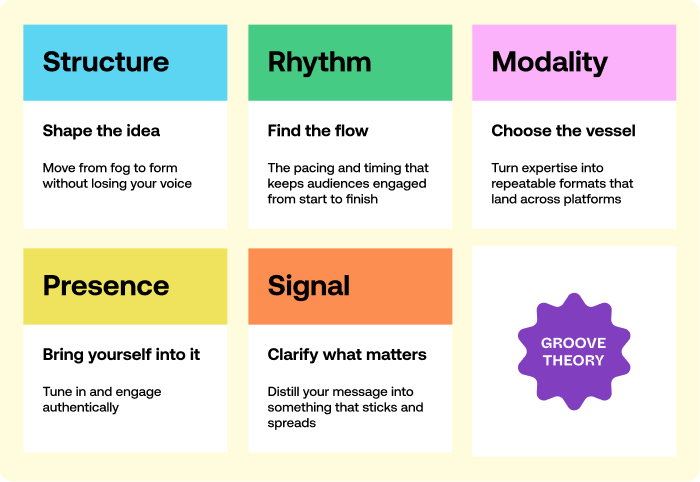
Modality is one of the five elements of Groove Theory →
The Release
There's no end in sight. The world keeps generating crises - Gaza, Ukraine, Lebanon, Sudan, hurricane seasons that seem to arrive earlier and hit harder every year. WCK keeps showing up, because the need doesn't stop and neither does Andrés.
In April 2024, seven WCK workers were killed when Israeli strikes hit their convoy in Gaza. In November, another strike killed three more. Each time, Andrés paused operations. Each time, he resumed. "We will not be deterred."
The path from fine dining to disaster relief looks like a pivot. But it's not. It's the same skill - feeding people - just finding the modality that matches the moment.
José Andrés could have kept opening restaurants. Instead, he let a group of women in Haiti show him what else his expertise could be used for.
Whether you’re throwing yourself into a charitable endeavour, or simply seeking to make your day-to-day work more resilient, compelling or sustainable - there’s a bean-shaped question we can borrow.
What's your sòs pwa nwa? And who's waiting to show you?
Howard
Extended Mix
- The work is Seeing: “At the very highest level, cooking is about seeing. Seeing problems as challenges to be solved, seeing adversity as an opportunity for innovation, seeing traditions as means not ends, and seeing the familiar, the conventional, even the tired in a fresh and maybe even magical way.”
- $50,000 to 130 million meals: Andrés funded WCK with his $50,000 Vilcek Foundation award - a prize for immigrant entrepreneurs. He could have opened another restaurant. Instead: a disaster relief organization that now serves 130 million meals a year.

Member discussion