Groove Theory #25 - The Woman with the Moog
I'm your host, Howard Gray, founder of Wavetable.
Currently: readying an Ibiza return (including fish shack, no less); spinning up a new storybuilding game
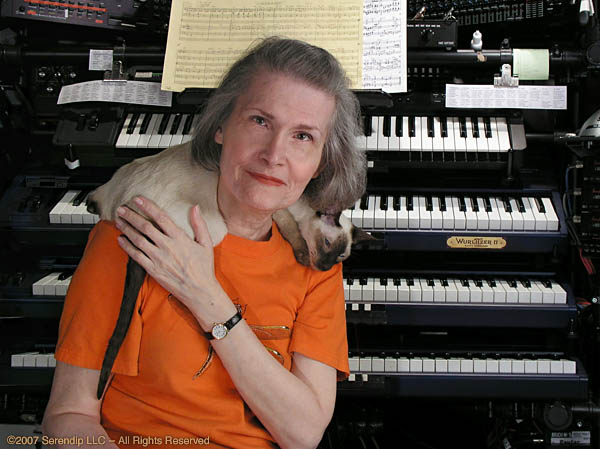
It's the late 1960s on Manhattan's Upper West Side, and there's a strange hammering noise coming from a woman’s apartment.
The early Moog oscillators drifted constantly - you could record one or two measures, maybe, before the whole thing slid out of tune. So she would bang on the casing with a hammer, coax it back, and start again. She’d play one note at a time, on a synth that could only play one note at a time.
She did this for a thousand hours, after her day job, on an eight-track recorder she'd built from used parts. At the time, even Abbey Road was still on four-track.
The result was the first classical album to sell a million copies. Within a few years, she’d soundtracked three of the most iconic movies ever made.
Her name was Wendy Carlos.
The Tension
The million-selling album was Switched-On Bach - Bach's Brandenburg Concerto No. 3, pieces by Beethoven and Handel - all of it performed on a Moog synthesizer. Every note layered by hand. Every part recorded separately, coordinated by click track.
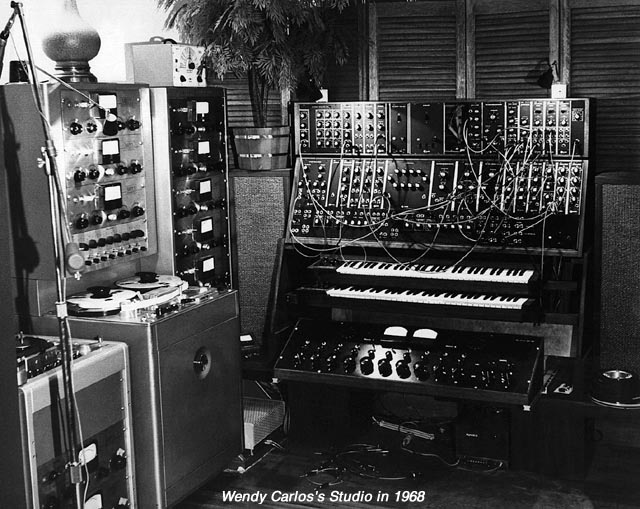
It was a proof of concept. Carlos wanted to make her own music, but first she had to prove the Moog could make any music. So she chose Bach - a Trojan horse. The material was the credentials; the instrument was the point.
On its release in 1968, the classical establishment was appalled - Switched-On Bach caused a fury among purists, who watched in horror as it became the first classical recording to sell a million copies.
The avant-garde wasn't any kinder. They were deep in atonal serialism; Carlos wanted to make music you could actually listen to.
She fit neither world. Too electronic for the traditionalists, too melodic for the experimentalists.
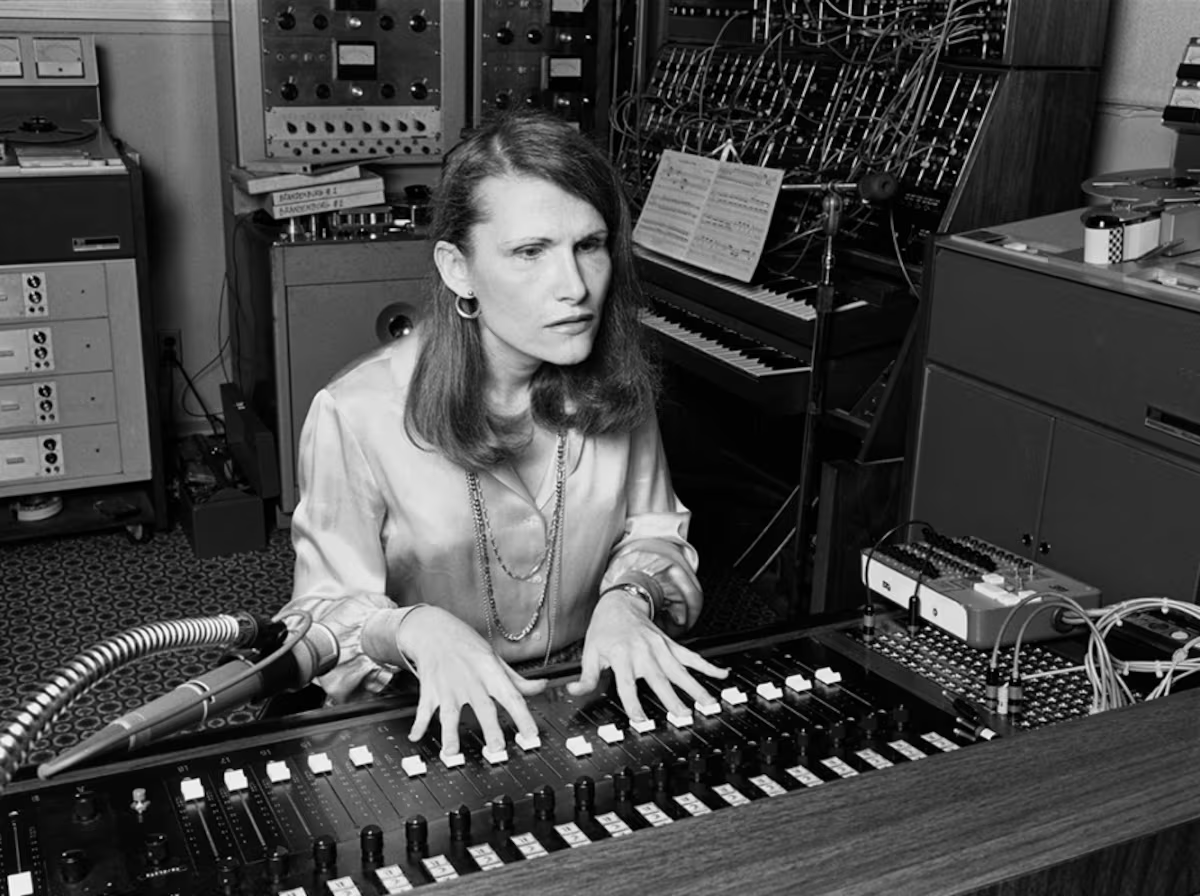
And she was alone. Not just professionally - personally. There were parts of herself she couldn't share with anyone yet. Some nights, she would ride the subway to Fifth Avenue and walk up and down the streets just to feel surrounded by people.
"That's the one problem with being a Maverick," she said later. "One feels so alone."
Of course, Carlos had something most people don't: she was right. The Moog could make music. Her bet paid off. But she didn't know that when she was banging on the casing with a hammer.
Step into it
You've built something new. But no one's asking for it yet - the vocabulary doesn't exist. So you find yourself translating it into terms people already understand, just to get in the room. You call it "like X but for Y." You lead with the credential they recognise, not the thing you actually made.
It works. You get the meeting.
But somewhere around the third time you explain it that way, you start to wonder: how long do I keep proving myself in someone else's language?
The Groove: Rhythm
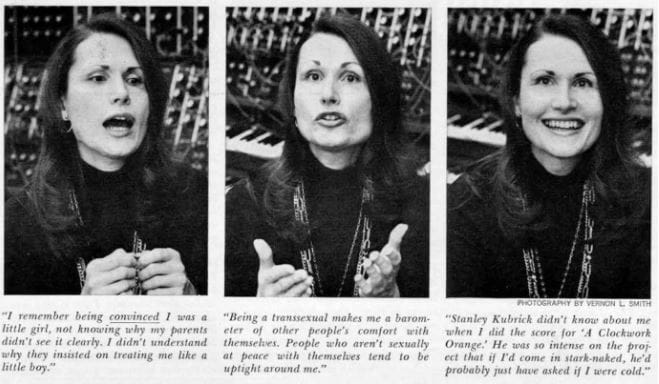
After Switched-On Bach, Carlos scored A Clockwork Orange for Stanley Kubrick:
“The face-to-face meetings for spotting music couldn’t have lasted very much more than a week or two each for me and my then partner and producer, Rachel… Since my none-too-portable studio was located in New York, and Kubrick didn’t travel, the rest of the collaboration took place via long phone calls and messages, express packages of cassettes, tapes, film and video footage, and written memos and notes.”
Then he asked her back for The Shining.
She spent two years on it. No contract - just Kubrick's word and the work. She delivered twenty-four tracks. He used three.
"All Carlos's music arrived and Stanley was very dissatisfied," his editor said later. "By then he'd made up his mind to go with Penderecki and Ligeti."
She considered legal action. There was no contract, so there was no case. She vowed never to work with him again.
And then she kept going. More records. More soundtracks. Forty more years of work, most of it in near-total isolation - rarely giving interviews, never joining a scene.
Work wasn't the cause of her isolation - it was her response to it. The one thing she could control.
“Composing takes up every waking moment," she said. "The best ideas come when I've really spent a lot of time on it, then leave it. You have to grab it before it vanishes - if you give it an hour, it will probably be gone.”
The validation did come. Eventually. Just not from the places she might have expected.
Groove Notes
Carlos wasn't just a Moog user - she helped build it. She met Robert Moog in 1964 and became one of his most demanding collaborators, pushing for a touch-sensitive keyboard and a polyphonic generator bank years before either was standard. "He was a creative engineer who spoke music," she said. "I was a musician who spoke science."
2. Proof of concept needn't be compromise
Carlos chose Bach because Bach would get people to listen. Familiar material, unfamiliar instrument. She had to prove the Moog could make music before anyone would trust her to make her own. The three years of Bach were the price of admission.
Rhythm is one of the five elements of Groove Theory →
The Release
Forty years after Switched-On Bach, when David Fincher was briefing Trent Reznor and Atticus Ross on his movie “The Social Network”, he had one reference: "Do it like Wendy Carlos would."
Reznor spent three weeks figuring out how that could work. "It was the one moment in the process where it felt like there may be a homicide," he said later. (For more on Trent Reznor, see Groove Theory #10.)
Her name still meant something. Four decades on, in a world full of electronic music, Fincher reached for Wendy Carlos.
Daft Punk built their Tron: Legacy score on top of her original soundtrack. Aphex Twin, Brian Eno, Giorgio Moroder, Radiohead - all cited her influence.
Wendy Carlos is 85 now. She hasn't given an interview in over a decade. When a biographer tried to write about her, dozens of people who'd worked with her over sixty years declined to be interviewed. Not one person in her personal or professional circle agreed to speak on the record.
Her music isn't on Spotify - she issues takedowns when people upload it. She's still in New York, still working, still alone.
I don't think the recognition fixed that. Maybe it was never supposed to.
Some nights, you walk Fifth Avenue just to feel surrounded by people.
Howard
“What is full of redundancy or formula is predictably boring. What is free of all structure or discipline is randomly boring. In between lies art.”
- Wendy Carlos
Extended Mix
- Wavetable team member Fer Franco’s new album is out this week - the latest in a long line of artists to build on the foundations of the synth pioneers
- And speaking of Wavetable, our company name came from the world of synthesizers - wavetable synthesis blends digital precision with analog warmth. Felt right.

Member discussion