Groove Theory #28 - Carlito's Run Time
I'm your host, Howard Gray - founder of Wavetable.
Currently: Explaining myriad electronic music sub-genres to a newbie (a good teaching challenge); creating game characters - from zen mentor to washed-up rockstar.
Bill Pankow kills the sound.
This is how he works - images first, no dialogue, no score. Just bodies in space.
He's been Brian De Palma's editor for nearly a decade, and De Palma shoots everything with intention. Pankow's job is to find it.
On screen: a man walks into a room. Pool table under hard light, bar along the back wall, bathroom somewhere out of sight. Three zones and no easy way out.
The man clocks the room. Someone else clocks him.
Pankow watches it build. Finds his cuts. A version goes to Universal for the studio's notes.
And then, they wait.
The Tension
The pool hall scene in Carlito's Way runs about seven minutes. Al Pacino walks into a drug deal with his cousin. By the end, almost everyone is dead. (Inevitably.)
The film was heavily character-based with relatively little action. The pool hall sequence - the very first scene shot during production - had to be elaborate. It had to work.
De Palma had already made Scarface, The Untouchables, Dressed to Kill. He knew how to build tension. But the studio's note came back: way too long.
The team braced themselves.
To their surprise, De Palma agreed. Something was off. The scene wasn't working.
But his fix wasn't to cut - it was to add. More shots, extended beats, rebuilt sections. More setup, not less.
The pool hall scene went to the studio once more. The notes came back: much better.
Except, the scene was longer. They just couldn't tell.
Step Into It
You're on a Zoom/Teams/yogurt pots with bits of string. Someone's presenting. They're ten minutes in and you've already checked your email twice.
It's not that they're going slowly. If anything, they're rushing - cramming points, skipping context, racing to cover everything. But somehow, it drags.
Other times, you're in something for an hour and it feels like fifteen minutes. What's the difference?
When you present (yes, alas, this includes you - and me), the people on the other end feel this too.
(A clue: a Stanford study found that video calls exhaust us because the brain works harder to read cues that aren't there.)
The Groove: Rhythm
The pacing and timing that keeps audiences engaged from start to finish.
Julian Palmer's superb shot-by-shot breakdown of the sequence. His observation: "The distance between characters IS the tension."
So what did De Palma actually add? Geography.
He felt the audience needed to see Carlito's viewpoint - where everyone was, how close they were - to understand the stakes.
So he and Pankow added shots establishing the space. Three distinct zones - pool table, bar, bathroom - and the distance between them.
Music louder at one end than the other. The colour palette draining as they walked deeper in. Billiard balls positioned with the same precision as the actors.
More clarity. More room to breathe. And suddenly, faster.
Run time and live time aren't the same thing. De Palma knew the difference.
Pankow describes his approach simply: "The rhythm has always been established by just feeling how long the shot needs to go on." No formula. No stopwatch. Just feel.
Paul Hirsch, who edited De Palma's earlier work, approaches it differently. A drummer turned editor, he thinks of film editing as musical interpretation - pacing scenes to an internal beat, rationing pauses like drum fills.
Two opposite methods - Pankow cuts with the sound off, Hirsch thinks in music - but they land in the same place. Feel. Rhythm. An internal count that isn't on the clock.
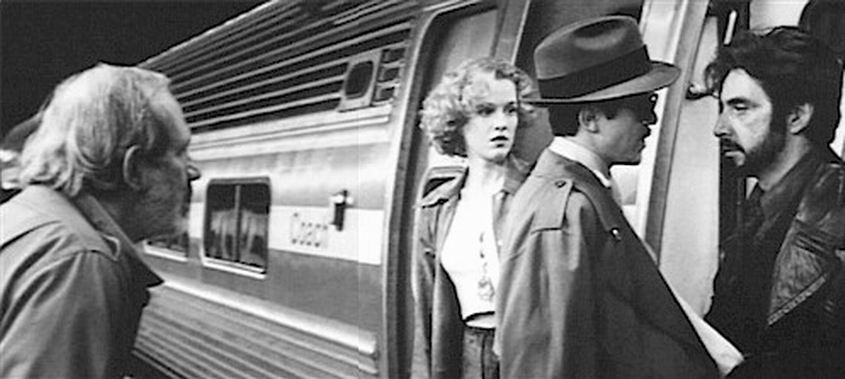
You can't shortcut this. Pankow edited four De Palma films before Carlito's Way. Hirsch cut Star Wars and The Empire Strikes Back. The feel comes from reps - hundreds of scenes, thousands of cuts, years of watching what works and what drags.
That's both bad news and good news.
One of our drills, Director's Cut, trains exactly this - spotting story elements and seeing how they change the feel of a story.
1. Diagnose the real problem
When something feels too long, the problem might not be length. On Scarface, Pacino couldn't settle in a scene. De Palma's diagnosis: "The problem with the scene is not the scene, but the size of the set." The surface symptom isn't the cause. Dig.
2. Pace to the internal beat
Sometimes more is faster. Hirsch thinks of editing as musical interpretation - there's an internal rhythm you're pacing to, not a timer. Also see - Intensity, not Tempo.
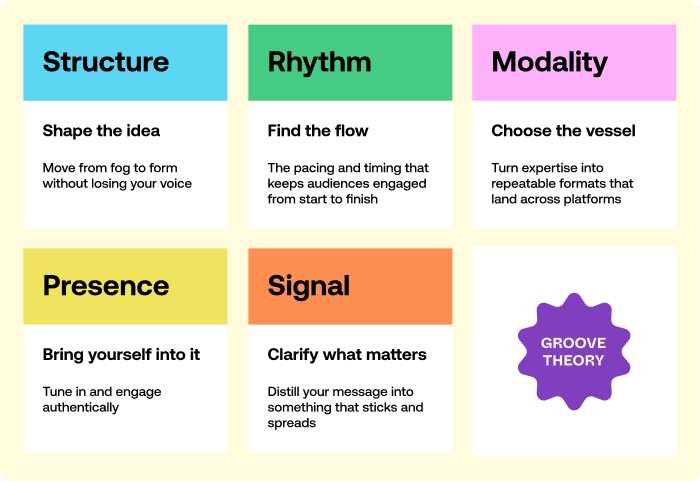
Rhythm is one of the five elements of Groove Theory ->
The Release
Run time is what the stopwatch says. Live time is what the audience experiences. They're not the same.
Bill Pankow doesn't use a stopwatch. Neither does our audience. Setup that clarifies feels fast. Rushing that confuses feels slow.
Carlito walks into that pool hall and clocks the room - pool table, bar, bathroom. Three zones. By the time the tension breaks, we know exactly where everyone is standing. That's why it works. That's why seven minutes feels like three.
Clock the room. Run time or live time?
Howard
Extended Mix
- The escalator problem: Carlito's Way ends with a chase through Grand Central station. Pankow had to cut the escalator sequence so audiences wouldn't notice how long it was actually running. Same principle - run time versus live time.
- The Herrmann discovery: While cutting Sisters, Paul Hirsch felt the footage was flat. He synced the Psycho score over De Palma's footage as a temp track - and suddenly it worked. Hirsch convinced De Palma that Bernard Herrmann was their man. Herrmann, then in his sixties and considered past his prime, was hired immediately. The collaboration relaunched his career.
- Presentations that fly by: At SXSW London, I sat in a LEGO Foundation session. Slides, yes - but three hands-on building moments woven in. 35 mins minutes felt like 15. The time flew because we were inside, doing it, vs. watching from the edges.
Member discussion