Groove Theory #33 - The Tour He Stopped Giving
I'm your host, Howard Gray - founder of Wavetable.
Currently: making a 90s platform game for TikTok team members to level up their AI skills; visiting Cyberdog in Camden Market (no purchases this time, alas)
I look at houses I am never going to buy.
I stop at estate agents' windows the way other people stop at bakeries, and I've run the numbers on places in towns I'd been in for just two hours.
It isn't really about property, though. It's the fantasy of somewhere that ends up completely yours, because you get to make every decision along the way.
Most of us never do it. Some do - and get a very good kitchen along with a home gym or garden studio they never finish.
Dennis Severs did it and then kept going - way past the point where a normal person stops.
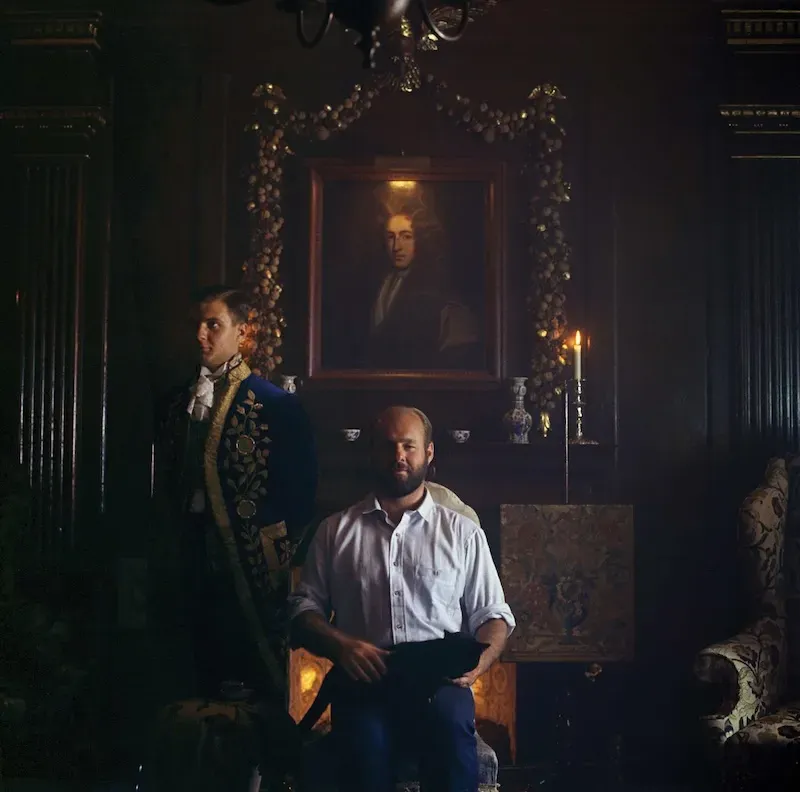
He was Californian, from Escondido, and he moved to London in 1967, five days after finishing high school. He came for the English light, he said (yes, a Californian said this...) and for a version of England he'd picked up from black-and-white Dickens adaptations.
He bought a Victorian horse-drawn carriage and drove tourists round Kensington in top hat and tails. Then the traffic got bad, so he took the tour indoors. In September 1979 he bought a derelict Georgian house at 18 Folgate Street in Spitalfields and moved in. He declined to install electricity. He declined to install plumbing. "The 20th century is a nice place to visit," he said, "but you wouldn't want to live there."
Then he took a candle, a chamber pot and a bedroll, and slept in each of the ten rooms in turn - "so that I might arouse my intuition in the quest for each room's soul."
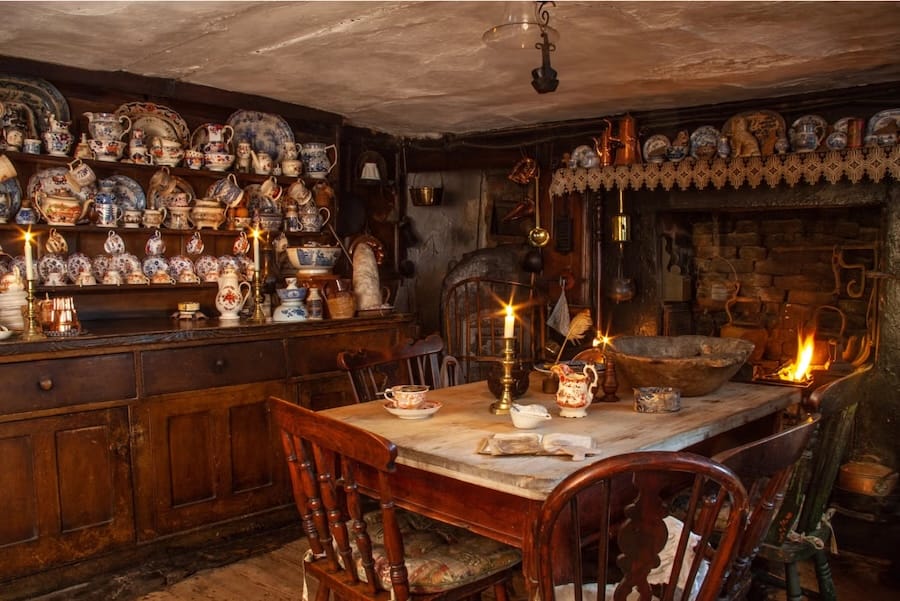
Each floor is designed to be a different moment in time. 1725 on the ground floor, 1919 by the time you reach the garret.
Every room is staged as though a family of Huguenot silk weavers was there moments before you arrive. Candles. A lit fire. Half-eaten bread. He invented the family, the Jervises, gave them two hundred years at 18 Folgate Street, and called the result a still-life drama.
It took him the rest of his life.
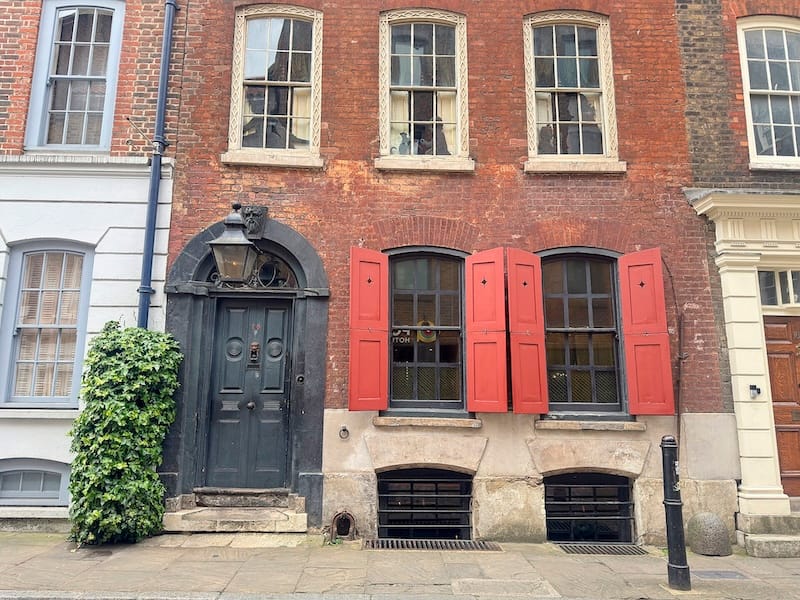
The Tension
For twenty years, Severs was the tour.
He walked people through it himself, by appointment, at seven, with straw laid on the pavement outside. Ten rooms by candlelight, him talking the whole way. A glass of port at the end, and hooves on the cobbles. David Hockney called it one of the world's five great experiences. If you interrupted and Severs didn't warm to you, he put you out on the street.
He was, by every account, a magnificent guide.
Then he stopped. Tired of it, he said, and told visitors to walk round in silence and imagine the thing for themselves.
Which is the much harder version. For twenty years he had been the proof that the house worked.
How could he remain present when he wasn't there?
Step Into It
If we think about our own work, it's pretty rare we get to give the kind of tour Severs did: room-by-room, captive audience, key details highlighted.
Most of the time we're offering up the silent tour. Our audience has to imagine things for themselves. Fill in the gaps. Colour in the spaces. We hope they interpret it all the way we hope they do.
We don't tend to think of our tour as being silent, but we do get fed up when people miss the point, misunderstand it, see something that isn't there.
Perhaps it's about designing ourselves back into it somehow.
The Groove: Presence
So how do you run a room you're not standing in?
Severs answered it three ways. The silence you've already met. The other two he had to build.
The second is the notes.
Not wall labels. Notes - little written things placed about the rooms, almost clues. They put Severs into a room he can't be physically in, and they tend to fall into three categories:
- Some poke fun at you, naming what you're privately thinking - that this is a bit much, that you're not sure you're doing it right - before you can feel caught thinking it.
- Some are meta reminders - breaking the fourth wall, reminding you what to do, or that the family has just left the room.
- And some just point at something you'd walked straight past. No explanation. Look there.
The combination makes you aware of Severs' presence, and you feel that's exactly the way he wants it - that he made all of this. Yet, of course, he's not here at all.
The third way is the staff.
They stand at the top of each staircase, saying nothing. You come up, and a small movement of the head sends you left instead of right.
You want to ask them a question, engage with them somehow, because they clearly have some answers. But they can't speak - they're under the same rule you are - and they're stationed the way an eighteenth-century household's servants would have been.
Why are they there? Two reasons, perhaps. They set the tone, and they imply that you should focus on the room - their head nod says 'over there... look a little closer'.
The house's motto is also a provocation. Above the door, Aut Visum Aut Non - "you either see it or you don't".
But this hands all the credit to the seeing and none to the scaffolding. Severs didn't leave the seeing to chance - he wrote the crib sheets, he posted the ushers, he put the whole house in a book as well as building it.
He took his own name off the assist, but his name is on the front of his house. He's anonymous, and yet he isn't.
Coincidentally, I re-watched season 6 of Curb this week. It's tricky being Anonymous.
1. You might be the thing that has to go - and stay
Severs was the reason the house worked. Then he stepped away and replaced his physical presence with another version of it.
2. Say the awkward thing before they think it
The notes that tease the visitor call out the skepticism in each room so it stops being a secret. Whatever your audience is privately thinking about your thing, just saying it first can flip them into co-conspirators vs. detached observers.
3. Design for noticing
People tend to learn more when they notice something - when their curiosity is sparked - rather than being told about the thing straight up. I would tell you more about this, but... well, y'know.

The Release
Because there are no photographs, I came home with almost nothing. I can describe maybe four rooms with any confidence, and I've caught myself more than once reaching for a camera roll that doesn't contain anything.
I can't remember his notes either. Which wouldn't have surprised him. Near the end he wrote: "I have recently come to accept what I refused to accept for so long: that the house is only ephemeral. That no one can put a preservation order on atmosphere."
And then, on the way out, one of the staff mentioned that somebody lives there. A friend of Severs'.
Not a ghost and not a guide. A resident. Each day he goes to a studio in Hackney Wick then returns home to 18 Folgate Street in the evening, sleeping in the master bedroom. In the morning strangers start filing through his home in silence, and the staff tidy up behind them, and somebody sets the table again.
I never saw him. The entire house is built around a family you are told about and never meet - and there is a real man upstairs doing just the same.
Severs stopped giving the tour. It's been silently running ever since.
Howard
Extended Mix
- He sold it back before he died. Severs died in December 1999, of AIDS. He had already sold the house to the Spitalfields Trust, who run it now - which is its own kind of planning: he arranged for the dream to survive the dreamer.
- The book. 18 Folgate Street: The Tale of a House in Spitalfields, with an introduction by Peter Ackroyd. Severs wrote the house down as well as building it.
- Exit through the gift shop: At the end, one of the staff walks you to the gift shop. A home whose owner declined to install electricity has a silent employee steering you to the till. Business, always business.
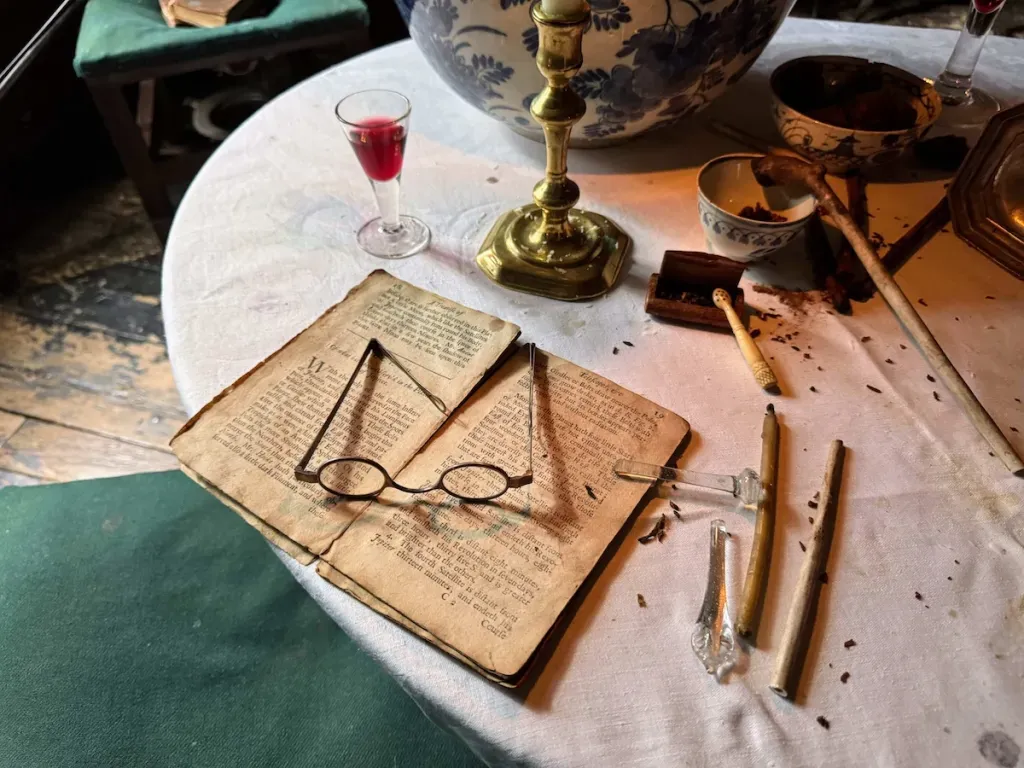
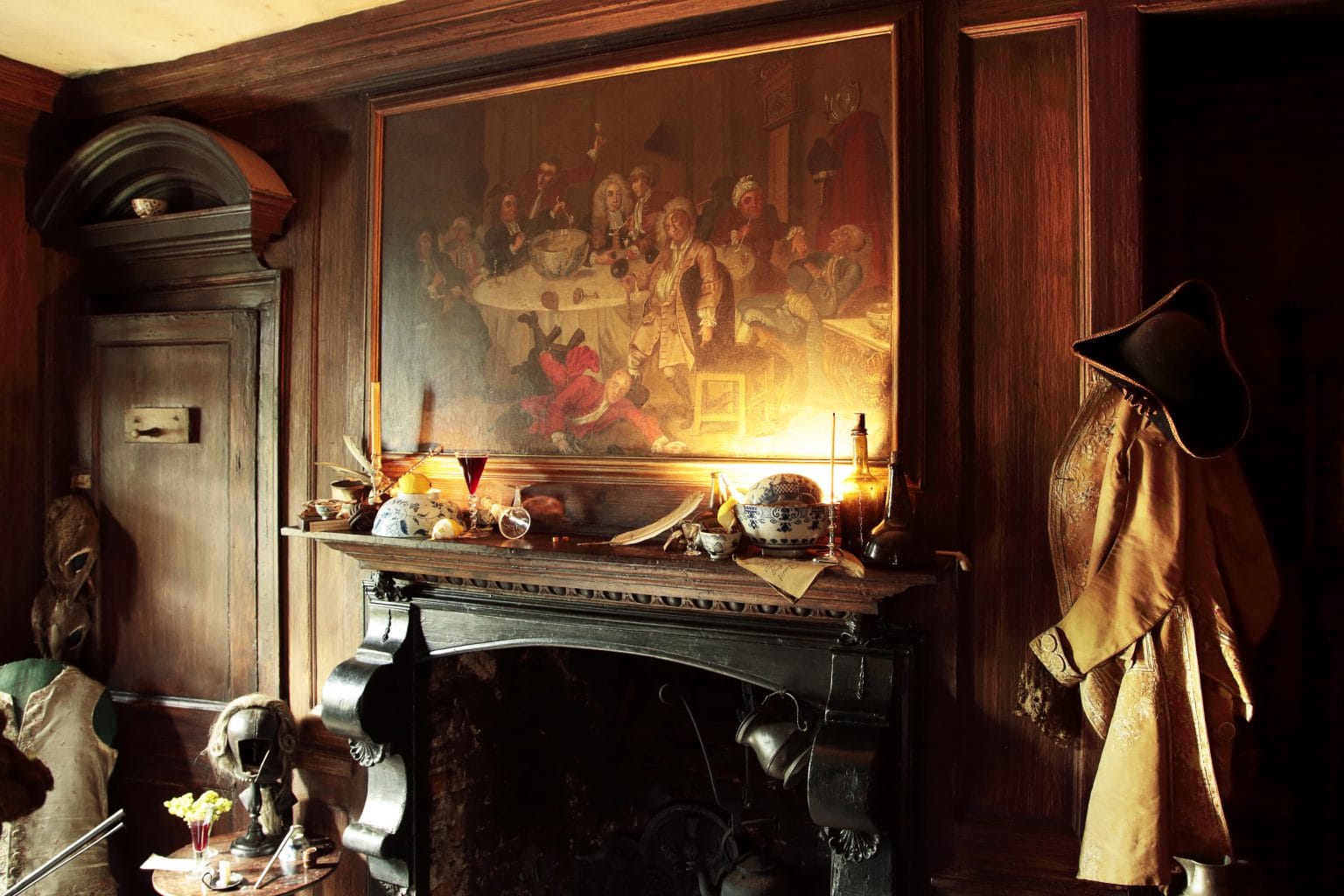
- The room inside the painting. The first-floor smoking room hangs a painting by W.Hogarth - men round a punch bowl, falling off their chairs - and then stages the aftermath around you: the emptied bowl, smashed glasses, clay pipes, a wig left on its stand. You're standing in the picture, a minute later.

Member discussion