Groove Theory #18 - Does Grand Theft Auto’s sewer system go anywhere?
Not yet a subscriber? Sign up. Or explore the Groove Theory archive →
I'm your host, Howard Gray, founder of Wavetable - the experiential education studio.
Currently: putting you in the shoes of a sports media CEO; feeling the pull of going on tour again (Paris, Berlin… Shoreditch)
In Grand Theft Auto IV, Liberty City is a fever dream of New York - honking taxis, steam rising from grates, pedestrians yelling at nobody. Millions of players have driven these streets, crashed these cars, caused the chaos the game invites.
But one person stopped. Paused the game. Looked down. Then up. Traced the sewers. Followed the power lines.
Any Austin wanted to know: does Liberty City's sewer system actually go anywhere? Do the power lines connect to anything?
He spent hours tracing wires across the map. Zooming in on utility poles. Checking if transformers matched the buildings they supposedly served.
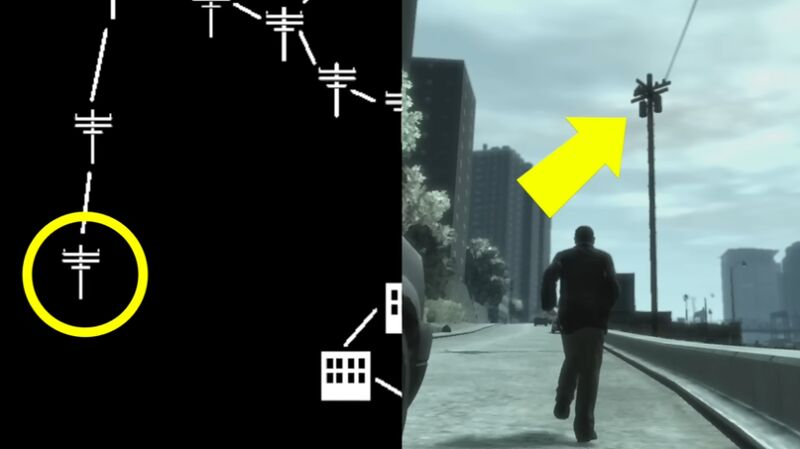
The answer, mostly, is no. They exist to feel right, not to function. But that's not the point.
The point is that over a million people subscribed to watch him ask the question.
The Tension
Any Austin notices things. The unemployment rate in Skyrim. How NPCs find jobs across different games. Whether the rivers in Breath of the Wild follow actual hydrology. He chases the stuff around the edges - details the developers added but players sprint past.
Plenty of people notice things. Most keep it to themselves, or mention it at dinner, or drop it in a tweet that disappears. The noticing stays private. A quirk, not a practice.
Austin made it a body of work. And the vessel he chose - long-form YouTube video essays - is inseparable from why it works.
You couldn't publish "Do Liberty City's Power Lines Connect to Anything?" as an academic paper. No journal would take it. A magazine might - but you'd be describing what Austin can just show you. You couldn't make it a TikTok - the question requires patience.
But a 25-minute YouTube essay? That format gives you permission to be both rigorous and absurd. To treat video game infrastructure with the seriousness of art criticism - and have people lean in rather than laugh you out of the room.
The format didn't just carry the insight. It made the whole thing possible.
Step Into It
You've noticed something like the power lines. A detail everyone else walks past. A pattern that connects two things no one thinks belong together. A question that sounds ridiculous... until you sit with it.
Most people let these things go. There’s no obvious place for them. Too niche for a meeting, too long for a tweet, too weird for a pitch deck. Sometimes even too weird for the pub.
So the noticing stays private. A quirk, not a practice.
But weird scales now. Platforms are better than ever at matching niche obsessions with the audiences who share them.
The weird might not be the problem. The vessel might be.
Any Austin didn't discover a new way to think about video games. He found a format that let him take his weird seriously - out loud, at length, with an audience that wanted to come along for the ride.
The Groove: Modality
Modality → Choose the vessel. Turn your expertise into formats that resonate.
Austin's videos run 20-40 minutes. Pretty long by internet standards. But the length isn't a bug - it's where the pleasure lives. You follow a power line. You notice where it goes. You sit with the fact that it doesn't go anywhere.
A five-minute version of this doesn't really work. The wandering is the point.
Speaking of wandering, games are worlds you can live in. Pause. Look around. Follow a wire just to see where it goes. That's why Austin's work resonates - the medium is immersive enough that even the details no one needed to build feel worth noticing.
There's something about YouTube, too. It's not just that it's video - it's that the audience for deep, specific, slightly absurd inquiry already exists there. Austin didn't have to convince anyone to care about virtual power grids. He just had to find where they already gathered.
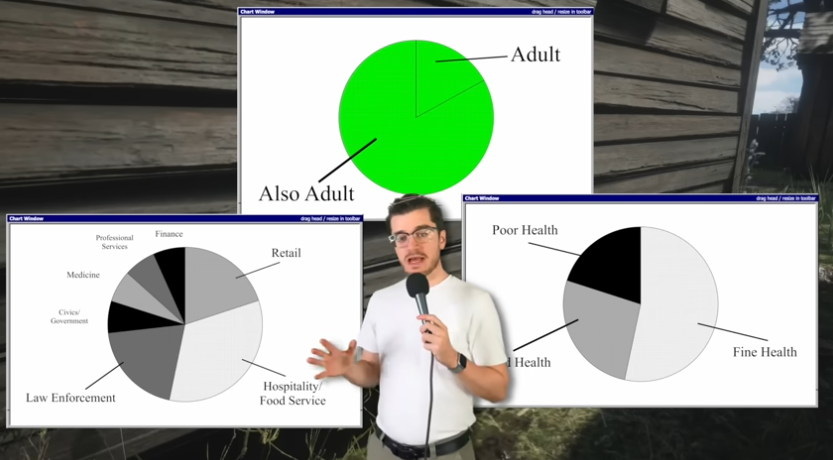
And the format gives him permission to be both things at once. Tyler Cowen calls him "the very best in the world at the hermeneutics of infrastructure within video games."
I had to look up “hermeneutics” (c’mon, did you really think I had Tyler Cowen levels of vocab…?). It means interpretation - the study of what things mean.
Austin applies hermeneutics to power lines. Yes, it sounds ridiculous and serious at the same time.
And the YouTube essay format lets it be both.
1. The vessel shapes what you're allowed to say.
Austin's insight isn't just about games - it's about finding a format where rigorous + absurd can coexist. Before you abandon an idea that isn't connecting, ask: is this just the wrong vessel?
2. Edges need elbowroom.
The stuff around the edges - the overlooked, the peripheral - often requires a longer format to matter. Quick formats reward the obvious. Patient formats reward the curious.
3. The audience might already exist.
Austin didn't build an audience for video game infrastructure analysis. He found where it already gathered. He credits almost all his growth not to promotion, networking, or ads - but to YouTube itself. Sometimes the work isn't convincing people to care - it's finding the place where they already do. And then letting the platform do the rest.
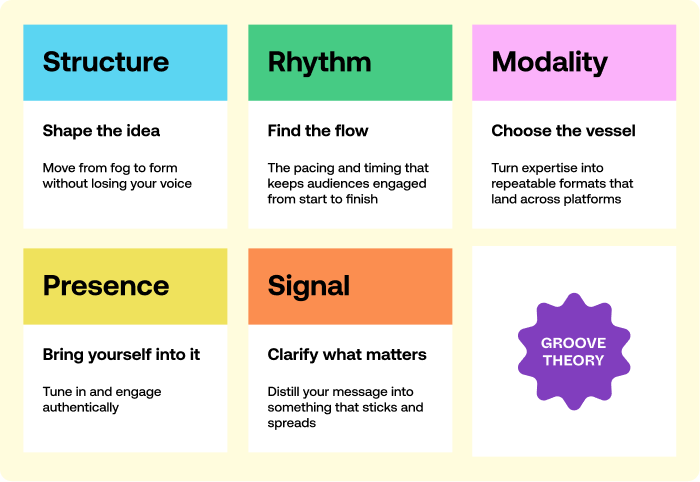
Modality is one of the five elements of Groove Theory. Learn more →
The Release
When Tyler Cowen asked Any Austin what makes him exceptional, he refused to answer. "Successful artists often [experience] decline when they understand their own methods," he said.
I think there's something to that. Unlike many creators, Austin didn't strategise or 'playbook' his way into this. He followed power lines because he wanted to know where they went. The format emerged from the curiosity, not the other way around.
But the choices still matter. Somewhere along the way, he picked YouTube. He picked long-form. He picked the stuff around the edges.
Austin traced power lines that went nowhere. Turns out, that's exactly where people wanted to go.
Wonder where yours might lead.
Howard
Extended Mix
- Commentary eating the world: Austin observes that people may now consume more NBA podcasts than actual NBA games (see: Overtime). The meta-layer becomes the primary experience. The same thing is happening with video games - analysis and lore videos rack up millions of views from people who'll never play the game.
- Infrastructure brain is contagious: After making videos about virtual power lines, Austin says he can't walk through a real city without noticing utility poles. The observation practice changes what you see everywhere. Once you see, you can’t unsee.
Member discussion