Groove Theory #23 - Dance Like No One's Watching (Because They Aren't)
I'm your host, Howard Gray, founder of Wavetable.
Currently: ‘balancing’ work with Easter holiday childcare; feeling concerned at the AI fork in the road.
A woman is dancing alone in a car park.
There's no music playing - at least, none we can hear. No audience, no occasion. Just Angela Trimbur, her phone propped against a wall, and a breakup she couldn't shake.
Angela kept dance hidden most of her life. When her family converted to Jehovah's Witnesses during her childhood, it wasn't the kind of thing you did. So she tucked it away. Years later, newly heartbroken in Los Angeles, she pulled it back out.
She called the video series Dance Like Nobody's Watching. No choreography, just her moving however she needed to move while strangers walked past pretending not to notice.
That video series became workshops. The workshops became the LA City Municipal Dance Squad - a group she describes as "around a six out of 10" in skill.
Then came a cancer diagnosis in 2018, a double mastectomy, and sixteen rounds of chemo. She sold everything, moved to New York, and became a dance teacher full-time.
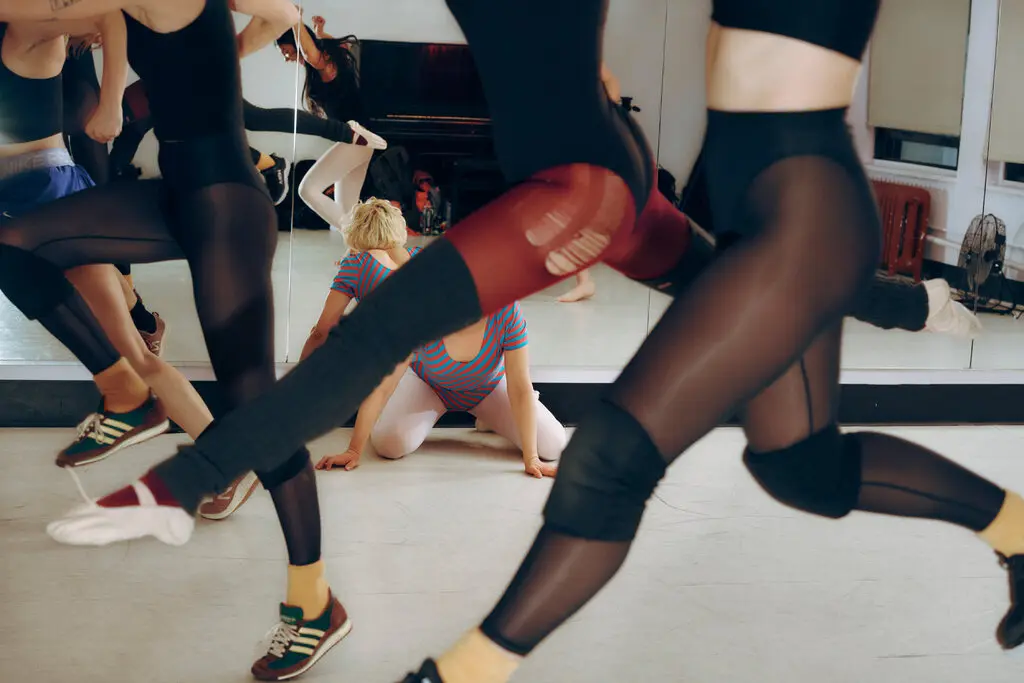
Now her classes sell out every week. Hundreds of people show up to do silly choreography - including a routine that mimics changing a nappy (aka diaper for US readers) - in a room where the only rule is: if you mess up, who cares?
The Tension
Dance is one of the most exposing things you can do. No words to hide behind. No way to intellectualise. Just your body, visible, moving - or not.
Trimbur built spaces where that exposure is the point. Where "around a six out of 10" is the explicit bar, where the choreography is absurd by design, where everyone's agreed to look a little ridiculous together.
One participant described her class as "therapy, a workout, a dance party and recess at the same time." Another, who'd lost both parents to cancer, said the dance squad helped her find who she was before the grief: "I was with these girls who had no guard up... who I am today is who I was before the tragedy."
Yeah, I know. Public dancing with strangers sounds like some people's idea of hell. But that's not really the point.
Step Into It
There's probably something you've tucked away.
A thing you used to do, or wanted to do, or keep meaning to try - but somewhere along the line you decided you weren't good enough, or it wasn't serious enough, or there just wasn't space for it anymore.
Maybe you pull it out occasionally, in private. Do it in front of the mirror. Daydream about it as you walk down the street. Or maybe you've forgotten it's there. Either way, the draw hasn't gone away.
(I have several of them. Standup. DJing. Boxing - to name just three.).
The problem probably isn't time, or motivation - although it may look that way. Instead, it may be closer to shame. The fear of being seen fumbling at something you actually care about. And you've got nowhere to do it - nowhere to be bad in front of people who've agreed that being bad is fine.
So it stays tucked away, waiting for a confidence that never quite arrives.
The Groove: Structure
Structure: Shape the idea. Move from fog to form without losing your voice.
Angela Trimbur didn't just start teaching dance. She built the room first.
The structure she created does the heavy lifting. Not the encouragement, not the pep talk - but the low bar, the format, the absurdity. Those choices create permission before anyone walks through the door.
"Around a six out of 10" sounds like self-deprecation, but it's doing something else. When the bar is that explicit, you know what you're walking into. You're not going to be the worst one there - everyone's agreed to be roughly the same amount of bad.
The choreography works the same way. A routine that mimics changing a nappy is absurd by design (do you remember attempting your first nappy change? yup, me too.). You can't be embarrassed about getting it wrong when getting it wrong is half the point. The silliness is structural.
Dance Church might not be your kind of room (frankly, it’s not mine). But the principle holds: if you want people to try something exposing, you can't just tell them it's safe. You have to build the safety into the structure itself.
1. Permission needs a container.
Telling people "it's okay to fail" rarely works. You can't just announce that fumbling is fine. The room has to make it possible - the format, the bar, the way the whole thing is set up.
2. Details matter.
"LA City Municipal Dance Squad" sounds civic and slightly absurd. "Apathetic Aerobics" tells you what you're walking into before you arrive. Trimbur teaches in a Jane Fonda-worthy '80s leotard. It's not ironic. The costume says: we're doing something ridiculous, and I'm going first.
3. The format is the message.
Trimbur's cancer support group runs on Marco Polo - async video messages. "There's something beautiful about not having to be an active listener," she says. You don't have to nod along. Different mode, same principle.
Structure is one of the five elements of Groove Theory. Learn more →
The Release
When Angela Trimbur was dancing alone in car parks, filming herself for no audience, she had no idea where it was going. She was just trying to feel like herself again after heartbreak.
After cancer, she was asked what she'd do if she had two years left. Her answer: exactly what she's doing now. Teaching people to dance badly, together, in a place where that's the whole point.
We tend to wait until we're good enough before anyone can watch. Trimbur did it the other way round - being watched is how you get good enough. You just need the right room.
But more than getting good - being bad together is how you stop being alone with the thing you hid.
Howard
P.S. At Wavetable we're starting a Playtesting Circle. We share new stuff (games, scenarios, AI avatars), you share feedback, and get the chance to connect with other playtesters. Plus: interactive versions of previous Groove Theory editions. Reply 'playtest' to join. No dancing or diapers required.
Extended Mix
- The Timing: Trimbur didn't start Dance Church after her recovery. She built it during - sixteen rounds of chemo, double mastectomy, BRCA2 diagnosis. The room wasn't celebration. It was survival. Sometimes you build the thing you need while you still need it.
- Finding the Frame: She tells new dancers: "We're equal, we're 13, and we're just going to do some silly choreography to show our parents before dinner." The number matters. Not 5 (too young to care). Not 25 (too self-conscious). Thirteen - old enough to feel awkward, young enough to try anyway.
- The Comedy Class Disaster: My remix of a class where the institution thought ‘force you out of your comfort zone’ was the name of the game.
Member discussion