Groove Theory #32 - The Hum They Took Out
I'm your host, Howard Gray - founder of Wavetable.
Currently: in a village in northern Spain, finding out whether I can still write (early indications: yes?); plotting some in-person gatherings, in New York and in London.
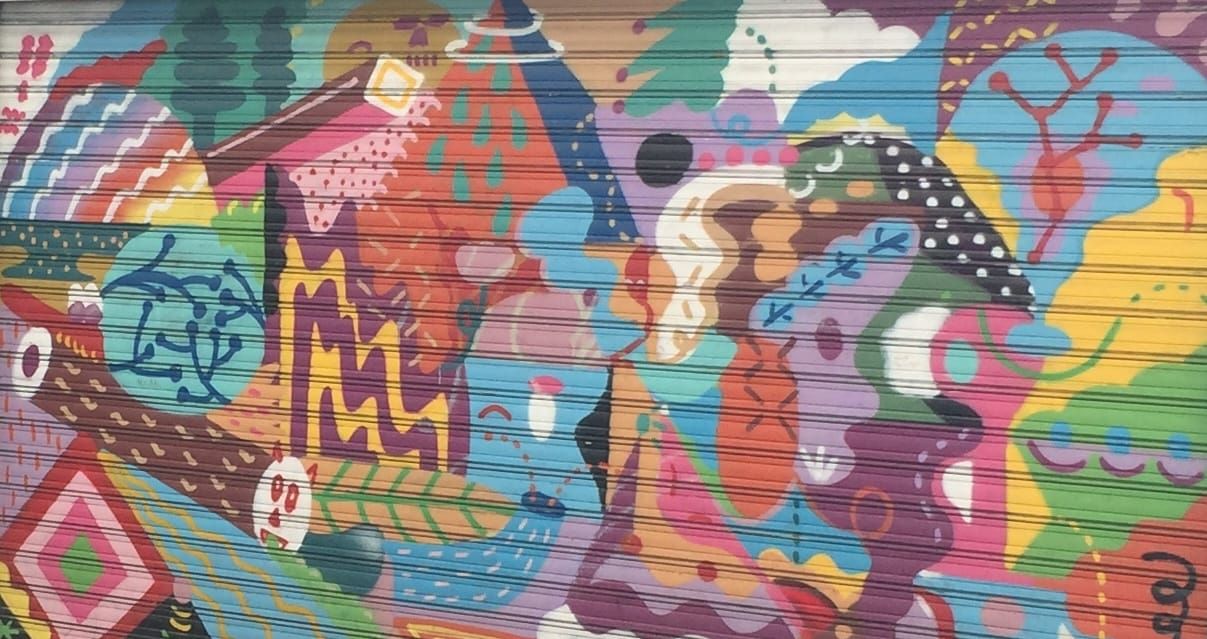
For years the lock screen on my phone was a piece of graffiti sprayed on a garage door. A photo I took somewhere in Palermo, Buenos Aires, in 2011. I don't know why it stayed there so long.
Fifteen years on, I am still soft on Buenos Aires. Perhaps it was Ana, my first Spanish tutor, who is from Palermo. Perhaps it was the cafes of San Telmo, the edgy enticement of Boca Juniors, or the steak and chimichurri at La Cabrera. It was not the Argentina football team.
I never asked Ana about Juana Molina. She'd have known exactly who I meant.
Juana y sus hermanas was a Friday night sketch show that started in 1991. Juana Molina played nearly every character in it herself, and most of the country watched.
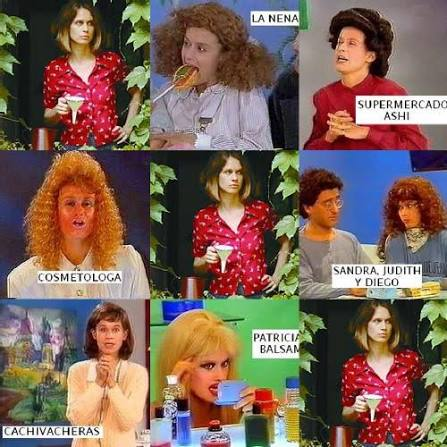
In 1993 she got pregnant, was ordered onto bed rest, and stopped filming. Lying still for the first time in years, she heard herself think.
"What am I doing? This is not what I wanted to do. I need to get out of this place right now before it is too late."
She had made a great deal of money. She had also worked out exactly what not doing it would feel like: "I imagined myself as a decrepit old woman watching MTV, thinking 'I could have done that.' I pictured myself feeling an infinite grudge, hatred, and envy."
Juana never went back to television. Her first record came out three years later.
It didn't quite go to plan.
The Tension
Rara arrived in 1996. Not one radio station in Argentina played a track from it. Zero.
The album went through a producer, and the producer was Gustavo Santaolalla - the man who built the sound of Latin alternative rock, later two Oscars and The Last of Us. Which is rather the problem. He shaped her songs toward something radio could handle: verse, chorus, verse. To make room he took out the drones - the long sustained hums under her songs that don't move when the song does.
They were too strange for radio, so out they came. The record is called Rara. It means strange.
Those hums were also the newest thing about her. She had found them by accident: "I got in some kind of trance, and the only thing that made me stop was the end of the cassette. I was totally taken by the drone I produced, like a feedback."
Years of being other people for a living had worked as armour - "nothing could hurt me because it wasn't myself I was being." Then she started to sing. "I suddenly felt naked."
What went into the shops was a tidier, more acceptable version of a woman who has never once in her life been tidy or acceptable.
Taking the drones out didn't help her. It also didn't hurt her. Argentina had decided about her before the needle dropped. "People just didn't come to my shows because they thought that, because I was an actress, what I was doing was shit."
It wasn't that Argentina couldn't take strange. In 1973 it took Artaud - Luis Alberto Spinetta's record, named after a French poet who died in an asylum. The sleeve was so awkwardly shaped that shops trimmed the corners off to make it fit the racks. Argentina decided it was the best record the country had ever made.
Artaud, by Spinetta's band Pescado Rabioso
Juana had spent years on television playing a parade of grotesques, and Argentina adored that too. The country had always liked her strange. It had liked her strange in costume.
But thirty years on, it's still the record she regrets. It's not on streaming. I don't know whether that's her doing or the label's.
Step Into It
I spent this week taking things out of a workshop deck. I gave the tech stack plain-English names, and rebuilt a guidebook written for engineers so a room of people who don't write code could use it.
Both were the right choice, and I'd make them again. But every edit went one way. Nothing I did made the deck stranger, and nobody has ever handed one back asking for it to be weirder.
Santaolalla would have said all of that too, and he'd have been right by every standard his craft recognises. The danger was never bad advice.
I still don't know whether I made it clearer or just safer. I find out in two weeks, in front of two hundred people, which is slightly late in the day.
You'll have your own version. The bit you left out because it needed too much explaining, or because someone senior would have raised an eyebrow.
Did it work? And - separate question - would you ever know if it hadn't?
The Groove: Presence
What happened to Juana next took four years and involved leaving the country.
She moved to Los Angeles, played clubs where nobody had heard of her or her television programme, and taught herself to record - loops, pedals, one woman playing every part. There was nobody to explain the drones to. Segundo came out in 2000. She released it herself in Argentina, where it did almost nothing: a second record, ignored twice.
Then a copy reached Japan. I have not been able to find out how.
Japan went for it. Domino signed her in 2003. David Byrne heard the record and took her across the States - and every night he came out first, in front of his own audience, to tell them who she was before she played. She was the first Argentine artist to play Coachella.
She hadn't got braver. She had removed the person you have to convince - and on Rara, that person's judgement was, on paper, worth more than hers.
She has produced everything herself since - seven more records, each one further out than the last. One experience of being tidied was enough.
Yeah, you're right. Never letting anybody produce you again is an odd thing to recommend. Plenty of people who stop listening just get worse in private.
She didn't. DOGA arrived in November 2025, her first record in eight years. The title is a word she made up.
1. Are they objecting to the work, or to you making it?
Argentina adored a woman playing a parade of grotesques on Friday night television. It would not take four minutes of sustained hum from the same woman. Same appetite, different container. If the resistance is to you doing this at all, editing the work moves nobody.
2. Which part is the strange one? You may not know yet.
Nobody did in 1996 - not the label, not Santaolalla, not Juana. The drones only became the point in hindsight. Keep one that turns out to be nothing and you lose a little reach. Cut one that turns out to be the thing and you never find out what you lost.

The Release
The tidy ending is that Argentina came round, and it sort of did - once the reviews started arriving from abroad, people at home had a rethink.
She doesn't tell it that way.
"Over the years I have built a completely new audience with completely different people, and only a few are fans of both things."
Only a few. Most of the country had watched her on Friday nights, and almost none of them followed her. Her records got home to Buenos Aires eventually. Via Tokyo.
Rara was sanded down and it failed. Segundo kept every drone and it failed too, at home. She paid in drones for an objection nobody was making.
Neither one worked. She only regrets one of them.
Most people say yes because they need the work. Juana didn't need the work and said yes anyway.
Where are you allowed to be strange? Somebody has already decided, and it probably wasn't you.
That graffitied wall was on my phone for years. If anybody had asked me why, I wouldn’t have had an answer. It was just a strange thing I liked.
Howard
P.S. After writing this I went back into the deck and put some of the strange back in. The demo game I built alongside it, too. I'll let you know.
Extended Mix
- Juana on working: "When there are thoughts, intentions, concepts, ego, all bad things happen. When you don't think and you're really there, the only result is pure truth."
- A frame for the Japan bit: Erin Meyer's The Culture Map argues that no culture is high- or low-context on its own - the position exists only relative to whoever is listening. Japan sits at the far end of that scale, where meaning lives under the words. The drones are the layer under the song. I can't prove that's why Tokyo went first. It's a good coincidence.
- Don't cry for me, Argentina: Two editions back, in Barrilete Cósmico, I wrote about Víctor Hugo Morales forgetting himself on the Maradona goal - and being ashamed of it afterwards. So that's twice now that Argentina has handed me someone who did their best work by stopping managing themselves...
Member discussion