Groove Theory #39 - Four Drummers
I'm your host, Howard Gray - founder of Wavetable.
Currently: helping teams scenario plan (here's one with a chocolate brand); wearing a suit more than I'd like.
The last time I wrote about drummers, it was very nearly the last thing I wrote.
December 2021, I was sixty editions into a monthly newsletter, and I opened that one by admitting I'd come close to killing the whole thing.
I wrote about drummers because I'd watched a documentary about them, and because they seemed like the goalkeepers of the music business - dependable but exposed, part of the team yet standing alone, hardly noticed until they're gone.
Then I published one more edition and stopped for twenty-two months - until Groove Theory #1 arrived.
Five years on, I've come back to drummers. One in particular.
The Tension
Lagos, 1972 or so. The Afrika Shrine is packed. On stage Fela Kuti is shirtless with a saxophone across his chest - part bandleader, part preacher, part politician. Everyone in the building is fixated on him.
Behind Fela a slight man sits at the drums looking perfectly relaxed.
Tony Allen drummed for Fela from 1964, and for most of that time he led the band as well. They played Afrobeat - highlife, jazz and funk in long, political songs. The name on the records was Fela's.
In late 1978, after a show at the Berlin Jazz Festival, Allen walked out. He left over money and credit, by most accounts, though he once said, "It was no big thing. I was just tired."
Fela Kuti and Africa 70 at the Berlin Jazz Festival, 1978, with Allen on drums.
The credit's still disputed, even six years after Allen passed. The line everyone quotes is Fela's: "Without Tony Allen, there would be no Afrobeat." However, there's no record of where or when Fela said it, and in 2025 his son Femi said it's impossible he ever did. By Femi's account, Fela taught Allen the style.
The other thing everyone repeats is that it took four drummers to replace Allen. The Independent said five. Allen himself said two.
So what did Tony Allen do back there?
Step Into It
I used to play warm-up DJ sets. The job is to get the room ready and then hand it over. Play too big, melodic, fast or intense and the headliner has nowhere to go. Do it well and they walk on to a full dancefloor, and the night's theirs. I was alright at it then. Relearning it recently, I've realised how difficult it is to do really well.
You've probably had the same job at some point: getting something ready for someone else, knowing you could do more, but holding back because that's what it needs.
And afterwards, no one can see what you left out. I think sometimes there can be a weird sadness and frustration in that.
The Groove: Rhythm
Allen was largely self-taught. He'd grown up on Nigerian highlife and American jazz (Art Blakey, Max Roach and the like), and had no model for playing the two together on a kit. He ended up with each hand and foot doing a different job, all locked together. "I'm creating different patterns with my four limbs," is how he put it.
Most drummers who can do that let us know. Allen used it to make the music feel simpler, easier to fall into. What you hear is one groove.
And he left room. He could've filled every bar and didn't. That's where the horns, the guitars and Fela come in.
Tony Allen on the drum patterns of Afrobeat.
The better Allen did the job, the harder it was to say afterwards what he'd done. The nearest thing to a measure is his 'replacement count' - how many people it took to cover what he'd been doing alone. Fela's own website quotes him saying Allen played "like four drummers". Allen said Fela "used two drummers playing my parts separately". The Independent, in 2006, had it at five. The count is two, four or five people. It's definitely not one.
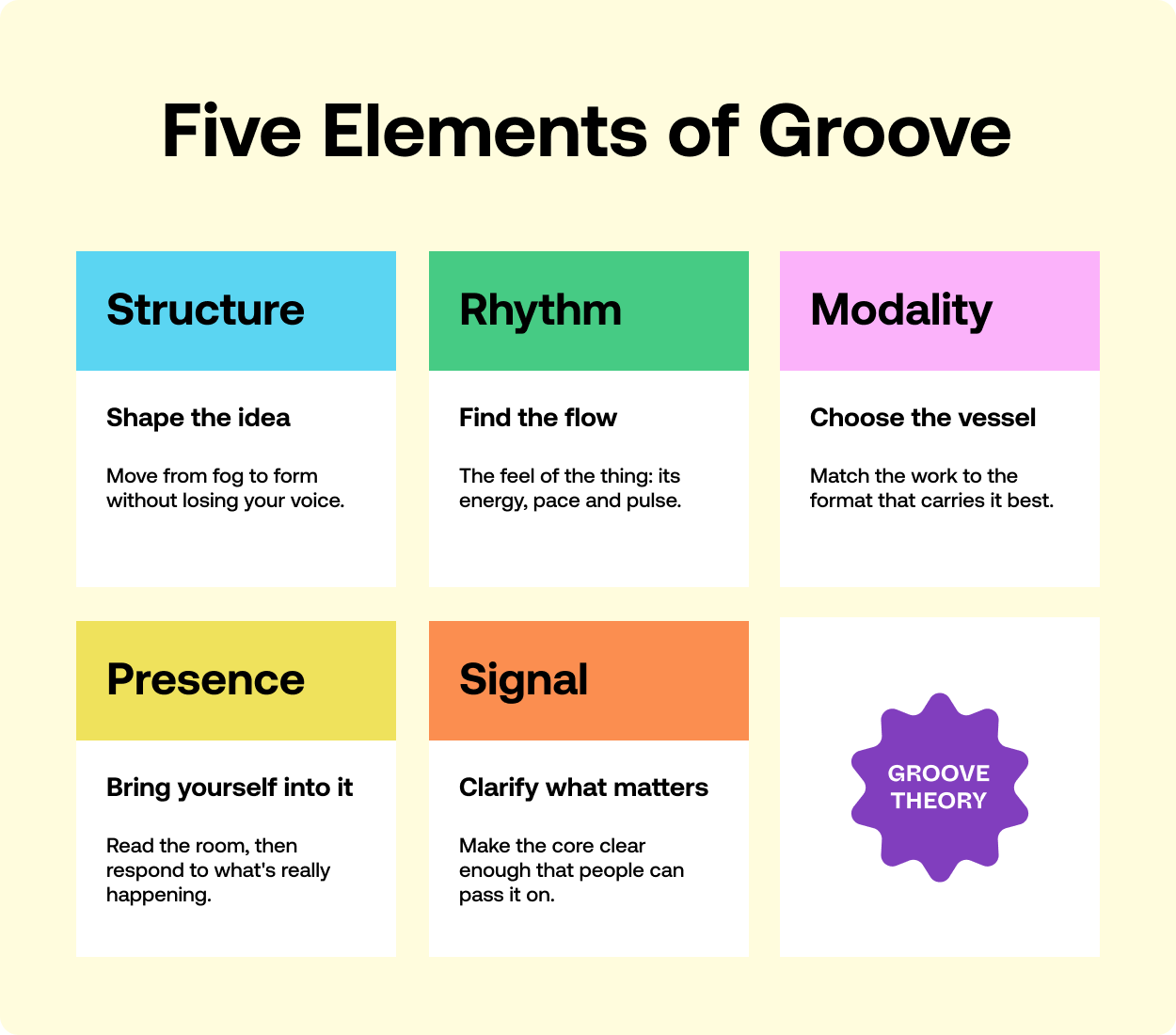
1) The better it's done, the less it shows
Allen could play four patterns at once, and he used that to make the groove feel simple. In the video above he breaks his playing down into patterns. If people can't tell what you did on a project, do the same: take them through it one part at a time.
2) The replacement count
Write down everything somebody would need to pick up if you left your job, then count how many people it'd take to cover it. Maybe helpful, alas, in an AI world.
3) Interlocking parts
Allen wasn't the only rhythm on those records. On Expensive Shit there are two conga players, a man on sticks and another percussionist, plus the guitars and bass. Afrobeat is built from small parts that fit in between each other, and his was one of them. Before you work out your part, listen to what everyone else is playing.
The Release
In that drummers newsletter in 2021 (Adventures #60, "Count Me In"), I told myself not to worry about the spotlight. "Just focus on rhythm and groove. Enjoy adding those grace notes, even if hardly anyone notices." It was one of my best-received newsletters. Annnnnd, one edition later, I stopped. Uff. Why? I didn't have my version of Allen's patterns, so I'd lost the thread. (That's why Groove Theory has a very deliberate setup. It keeps me shipping.)
Allen walked out too, in Berlin in 1978, but he kept playing for another forty years. He made records under his own name, and Blur's Damon Albarn formed two bands with him.
In 2016 a journalist asked him how many drummers it had taken to replace him. Two, or three, or four?
"It depends on my mood," he said. "When I'm in a happy mood playing, you can hear me like six drummers. On some days it could be 100!"
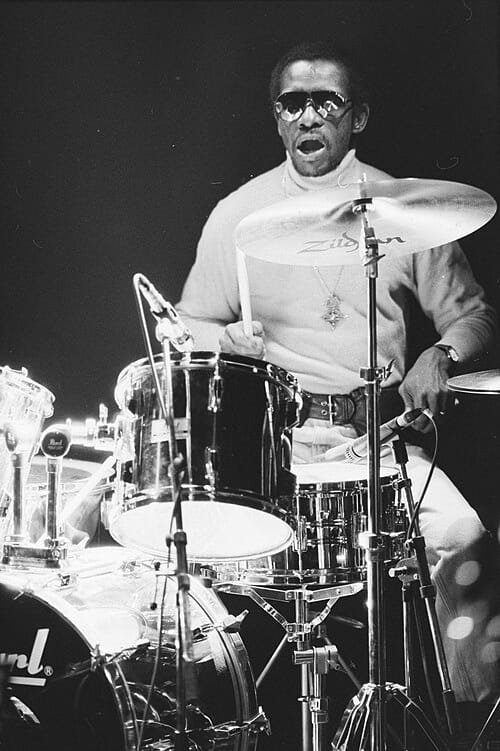
Sure, it'd be amazing if it took 100 people to replace you. But maybe it's just as good to be able to play like 100. There's something fun in it: being eclectic, moving across different genres and scenes, the way Allen did after Fela. And it feels apt now, when so many of us are doing several jobs at once with a bit of AI help.
This edition nearly didn't make it. The last couple of weeks have been intense, and I haven't been in an especially happy mood. But I got it done on Saturday afternoon - at a record store. The music helped.
Count me in.
Howard
P.S. Yes, this one's filed under Rhythm. How could an edition about a drummer NOT have been?
Extended Mix
- A place to start. Play "Water No Get Enemy", then play it again listening only to the drums. Allen's credited on Expensive Shit as 'lead drums'.
- The second life. The Good, the Bad & the Queen; Rocket Juice & the Moon, a trio with Albarn and Flea; a long run of solo records, and collabs with artists as diverse as Skepta and Jeff Mills.
- How Albarn got the gig. Blur's "Music Is My Radar" (2000) name-checks Allen. He heard it and got in touch. There's a good lesson in here, I sense.
- Brian Eno on Allen. "Perhaps the greatest drummer who ever lived."
Member discussion